What oil for a VW 1.9 TDI? Proven specifications
What oil for a VW 1.9 TDI? Check the recommended viscosities, VW standards and unit injectors (PD), and what to watch out for when choosing oil for this legendary diesel.
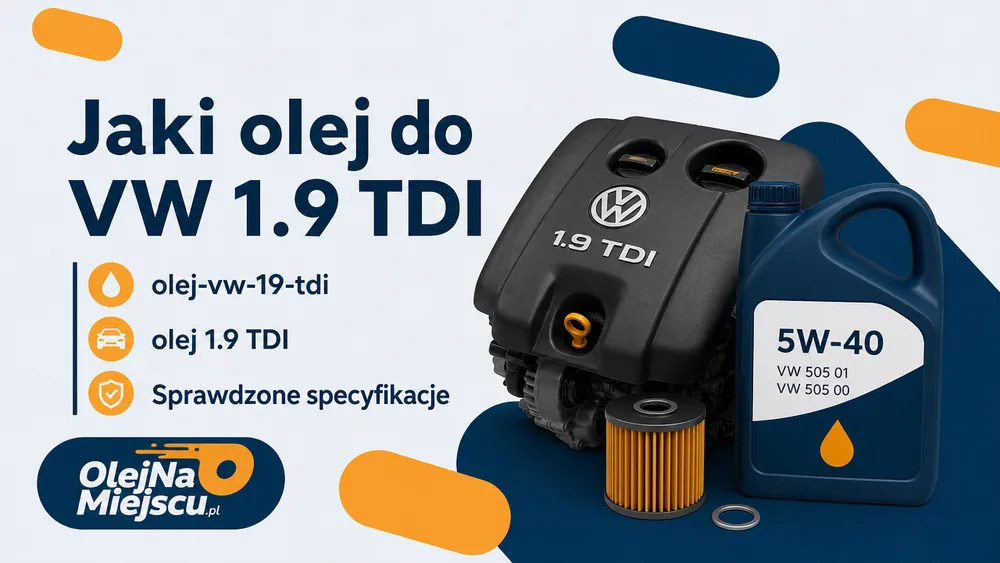
What oil for a VW 1.9 TDI? Proven specifications
7 min readOil for a VW 1.9 TDI is a topic that raises plenty of questions — and rightly so, because this legendary VAG-group diesel came in several versions with different requirements. The right oil choice determines the durability of this unit, known for its high mileage. In this guide we explain which viscosity and standard to choose, how the unit-injector version differs, and what to watch out for in particular.
VW 1.9 TDI — why the oil choice matters
The 1.9 TDI engine was fitted in countless VW, Audi, Skoda and Seat models over many years. It’s a design valued for its durability, but sensitive to lubrication quality — especially in the unit-injector versions (marked PD, Pumpe-Düse). Oil that is too weak or unsuitable shortens the life of the camshaft lobes and the injectors themselves.
Unit injectors (PD) versus common-rail injection
The key question is: is your 1.9 TDI a unit-injector version? PD units generate very high loads on the valvetrain and require oil with a special, stronger profile. Older 1.9 TDIs without unit injectors are less demanding in this respect. Telling them apart is the basis of the correct choice.
- PD version (unit injectors) — requires the VW 505.01 (or newer compatible) standard
- Non-PD version — most often the VW 505.00 standard
- Cars with a DPF — additionally a Low SAPS oil (e.g. VW 507.00)
- Always confirm the requirement in the manual and by the engine code
Recommended viscosity and VW standards
Most often 5W40 viscosity oils are used in the 1.9 TDI, and in cars with a DPF a 5W30 meeting the Low SAPS standard. The most important thing, however, is not viscosity itself but the VW approval — that’s what guarantees the oil can handle this unit’s loads. Pouring in oil without the right standard is the most common mistake with this engine.
For a PD version without a DPF, the safest choice is a 5W40 oil with the VW 505.01 standard. For cars with a particulate filter, the right one is a Low SAPS oil meeting VW 507.00, which protects the DPF from clogging.
What do the symbols 5W40 and 5W30 mean?
The first number with the letter W describes the oil’s cold behaviour (the lower it is, the easier the start in frost), and the second — the viscosity at high operating temperature. For the 1.9 TDI, the thicker-when-hot 5W40 oil works well in PD versions, while 5W30 Low SAPS is typical for cars with a DPF.
The most common mistakes when choosing oil for a 1.9 TDI
- Pouring in oil without the VW 505.01 standard in a unit-injector version
- Using ordinary oil (not Low SAPS) in a car with a DPF
- Going by viscosity alone, ignoring the approval
- Stretching the interval — a diesel loads the oil heavily with soot
- Topping up with random oil of a different specification
With the 1.9 TDI it’s not viscosity but the right VW standard that determines the durability of the valvetrain and unit injectors.
The change interval in the 1.9 TDI
Although long intervals are found from the factory, in practice — especially with city driving and high mileage — it’s worth shortening the change to 10,000–15,000 km. A diesel produces a lot of soot that quickly loads the oil, and in cars with a DPF there’s also oil dilution by fuel during filter regeneration.
How to recognise the unit-injector (PD) version
Since the PD version is crucial for the oil choice, it’s worth being able to recognise it. The most reliable method is to check the engine code in the registration document or on the nameplate and verify it in the technical data. Indirect clues also help:
- Engine code — the most reliable way to identify (e.g. in a database by VIN)
- Year of production and model — unit injectors appeared in newer 1.9 TDI variants
- The characteristic, slightly louder running sound of PD units
- The entry in the owner’s manual about the required oil standard
If you’re not sure, give us the make, model, year and engine code — we’ll help determine whether it’s a PD version and select an oil meeting the right VW standard.
Why you shouldn’t skimp on oil in a 1.9 TDI
The 1.9 TDI engine can cover enormous mileages, but only with regular servicing using the right oil. Skimping on oil quality or stretching changes shows up quickest on the camshaft and unit injectors, and their reconditioning can be costly. A high soot content in the oil with neglected changes accelerates the wear of the whole unit.
In practice the price difference between an average and a proper, branded oil with the right standard is small compared with the cost of a repair. For this design it’s a genuinely worthwhile investment in durability.
The 1.9 TDI forgives a lot, but it doesn’t forgive bad oil and stretched changes — that’s the most common cause of its problems.
Symptoms of bad or worn oil in a 1.9 TDI
This engine signals fairly clearly when the oil is unsuitable or overdue. It’s worth reacting to the first symptoms before the valvetrain or unit injectors suffer:
- Louder, “rattling” running, especially when cold
- Harder starting and rough idling
- A clear drop in smoothness and more smoke from the exhaust
- Oil that quickly turns black and thickens with a lot of soot
- A drop in the oil level between changes
What else to change along with the oil
In the 1.9 TDI it’s best to change the oil together with the filters — it’s a unit where fuel and air cleanliness really matter for the durability of the injection system. When changing the oil it’s worth considering:
- Oil filter — always with the oil
- Fuel filter — key to protecting the unit injectors and injection
- Air filter — affects the diesel’s running and performance
- Cabin filter — for comfort and blower efficiency
Changing a full set of filters during a single visit saves time and gives you the certainty that the car is comprehensively looked after. In a diesel with a DPF, a good fuel filter and Low SAPS oil are especially important.
Frequently asked questions about oil for the 1.9 TDI
What oil for a 1.9 TDI without unit injectors and without a DPF?
In older 1.9 TDIs without unit injectors and without a particulate filter, a 5W40 oil meeting the VW 505.00 standard is most often used. It’s always worth confirming the requirement in the manual and by the engine code, though, because there were many variants of this unit.
Is 5W40 suitable for every 1.9 TDI?
5W40 viscosity is typical for this engine, but on its own it’s not enough — the VW standard is the most important thing. Unit-injector versions require 505.01 oil, and cars with a DPF a Low SAPS oil (e.g. 507.00). When choosing oil, look above all at the approval.
How often to change the oil in a 1.9 TDI?
In practice, especially with city driving, a sensible interval is 10,000–15,000 km. A diesel loads the oil heavily with soot, and intervals that are too long harm this unit’s valvetrain and unit injectors the quickest.
We’ll select the oil for your 1.9 TDI
If you’re not sure whether your 1.9 TDI is a unit-injector version and which standard is the right one, we’ll help. During a mobile oil and filter change we select a product from a reputable brand precisely to the engine code and the car’s equipment, and carry out the service at your address — without a garage visit.
Check the scope and prices in the price list or book a convenient time online — we’ll come with the right oil and a full set of filters.
Related services
Need an oil change?
We’ll come to your address and handle the rest. No queues, no garage.