Should you change the oil once a year despite low mileage?
You drive little, so the oil will still do? Not necessarily. Oil ages over time too. Find out why it’s worth changing it once a year.

Should you change the oil once a year despite low mileage?
8 min readMany drivers are convinced that if the car covers only a few kilometres a year, the engine oil is still practically as good as new and can safely serve for another season. This is one of the most common and most expensive misconceptions in everyday car ownership. Oil ages not only from the kilometres you drive, but simply from the passage of time — and it does so completely regardless of whether the car is driven a lot or spends most of the year sitting in the garage.
That is exactly why, at low annual mileage, an iron rule still applies: change the oil once a year, even if the odometer shows only a symbolic few thousand kilometres. In this article we explain why time is just as dangerous for oil as kilometres, what exactly happens inside the engine of a car that mostly stands still, and how to recognise the moment when the oil needs changing despite low mileage.
Oil ages not only from kilometres
Engine oil is not an inert liquid but a precisely composed blend of a base oil and a package of enhancing additives. These additives — detergents, dispersants, corrosion inhibitors, friction modifiers and antioxidants — start working from day one and gradually get used up. Some of them react chemically with moisture, oxygen and combustion products, while others simply exhaust their reserve. This process is slower when the car sits, but it never stops completely.
On top of that comes the oxidation of the base oil itself. Oxygen from the air that is always present in the system slowly reacts with the oil, forming acids and deposits. The longer the oil stays in the engine, the further these processes advance — and a year is long enough that even in a rarely used car the oil clearly loses its original properties. That is why oil and car manufacturers almost always give the interval as “every X kilometres or once a year, whichever comes first”.
- The additive package depletes even while the car is standing still
- The base oil slowly oxidises under the influence of oxygen
- Moisture and condensate accumulate in the oil regardless of mileage
- Combustion products and acids remain in the sump between drives
Condensate and water — the silent enemy of a car that sits
The biggest problem for low-mileage cars is moisture. Every time the engine cools down after driving, water vapour condenses inside it — in exactly the same way that dew settles on the grass in the morning. This water gets into the oil and, if the engine regularly reaches its full operating temperature, most of it evaporates again. The trouble is that a car driven very little almost never warms up properly, so the condensate has no chance to evaporate and steadily builds up.
The accumulated water does plenty of damage in the oil. It promotes the formation of an emulsion — the characteristic brown-cream sludge under the filler cap — accelerates corrosion of metal components and weakens the action of the additives. The situation is made worse by the fact that low-mileage cars very often drive on short city trips — to the shops, to work or dropping off the kids — and it is precisely these short, few-minute stretches that strain the oil the most, because the engine barely warms up.
Additive depletion and loss of properties
Fresh oil has strictly defined parameters: the right viscosity, an alkaline reserve (TBN) that neutralises acids, and a full set of additives protecting the engine. Over time all of these values fall. The alkaline reserve decreases as it neutralises the acids formed by combustion and oxidation, which makes the oil gradually more aggressive towards metal. Detergents and dispersants lose the ability to keep contaminants in suspension, so deposits and sludge form more easily.
It is worth remembering that oil has a kind of expiry date — both in a sealed bottle and once poured into the engine. That is why the time criterion is so important: even perfectly stored, barely used oil no longer offers the same protection after a year in the engine as freshly poured oil. Sticking to mileage alone, ignoring time, can seriously stretch the real service life of the oil far beyond what is healthy for it.
Low mileage is no reason to forget about the oil — it is often a reason to watch it even more closely.
Internal corrosion — the most insidious effect
When the oil loses its alkaline reserve and water and acidic combustion products build up in the sump, the inside of the engine begins to corrode. Rust and pitting appear where you would least expect them: on the cylinder walls, on the camshaft, on the bearing surfaces. It is a slow process, invisible from the outside, which is exactly what makes it so insidious — the owner of a car sitting in the garage is convinced that “nothing is happening”, while the engine is quietly deteriorating.
The paradox is that an intensively used car, with a regularly warmed-up engine and fresh oil, is often in better shape than a “museum piece” that covers a few hundred kilometres a year and stands for months on end. In the latter case it is precisely corrosion from condensate, rather than mechanical wear, that most often shortens the life of the powertrain.
Why exactly once a year?
The annual interval is a sensible compromise that follows from the rate at which oil ages. Over twelve months the additive package genuinely runs down, the base partially oxidises, and the accumulated moisture and acids reach a level at which the oil stops effectively protecting the engine. Even if in that time you do not reach the mileage set out in the standard interval for petrol engines, time does its work regardless of the odometer.
- A drop in the lubricating and protective properties of the oil
- Formation of deposits, sludge and emulsion in the engine
- Corrosion of internal components from condensate and acids
- Worse, noisier cold starting
- Risk of accelerated wear despite low mileage
The cost of an annual oil change is tiny compared with the price of repairing an engine damaged by neglect. It is one of the cheapest and most cost-effective service jobs you can do for a low-mileage car. Treat it not as an unnecessary expense but as a cheap insurance policy for the powertrain — one that pays for itself many times over the moment it prevents a single serious fault.
Seasonal cars, classics and long lay-ups
A separate group is made up of seasonal cars, classics and convertibles that sit untouched for half the year. In their case time works even more clearly, because on top of the natural ageing of the oil come long months of standstill during which moisture quietly accumulates in the sump. Fresh oil with a full alkaline reserve best protects the metal in this period, which is why the change is best done just before laying the car up for winter, not only in spring.
It is similar with cars bought second-hand as low-mileage examples. If you are not sure when the previous owner changed the oil, treat it as an opportunity for a reset — fresh oil and a new filter from day one give you a clear reference point and confidence that the engine is running on a sound lubricant. It is a small cost at purchase that can save you serious problems down the line.
How to tell whether the oil is ready to be changed
Before you decide, it is worth checking the level and condition of the oil on the dipstick yourself. Pay attention to the colour — very dark, almost black oil is a sign of advanced wear. Also check the smell and whether there is any creamy sludge under the filler cap indicating that water has emulsified. If the oil is clear and honey-coloured that is good, but once a year of service has passed it should be changed anyway — appearance does not always reveal the depletion of the additives.
I drive 3,000 km a year — do I really have to change the oil annually?
Yes. At 3,000 km a year the mileage interval will never be reached, but that does not mean the oil is fine. After a year the additive package is already partly exhausted and the oil has accumulated moisture from numerous cold starts. An annual change is actually more important in such a car than in one covering 20,000 km on calm long-distance runs, because short commutes strain the oil exceptionally hard.
Can the oil age in a car that is not driven at all?
It can. The oxidation of the base and the slow binding of moisture progress even in a stationary engine. In addition, a car that stands for a long time is exposed to water condensation with every change in ambient temperature. If the car is to remain unused for an extended period, it is best to pour in fresh oil before laying it up rather than after — fresh oil has a full alkaline reserve and best protects the metal against corrosion during storage.
How can I tell the oil is worn out despite low mileage?
The most common signals are very dark oil on the dipstick, creamy sludge under the filler cap, a noticeable smell of fuel and louder, heavier cold running of the engine. Bear in mind that at low mileage the symptoms can be subtle and easy to miss, which is why the time criterion is safer than relying on the appearance of the oil alone. If a year has passed, simply change the oil — it is the simplest and most reliable rule of all.
Do I need to change the oil filter as well during the annual change?
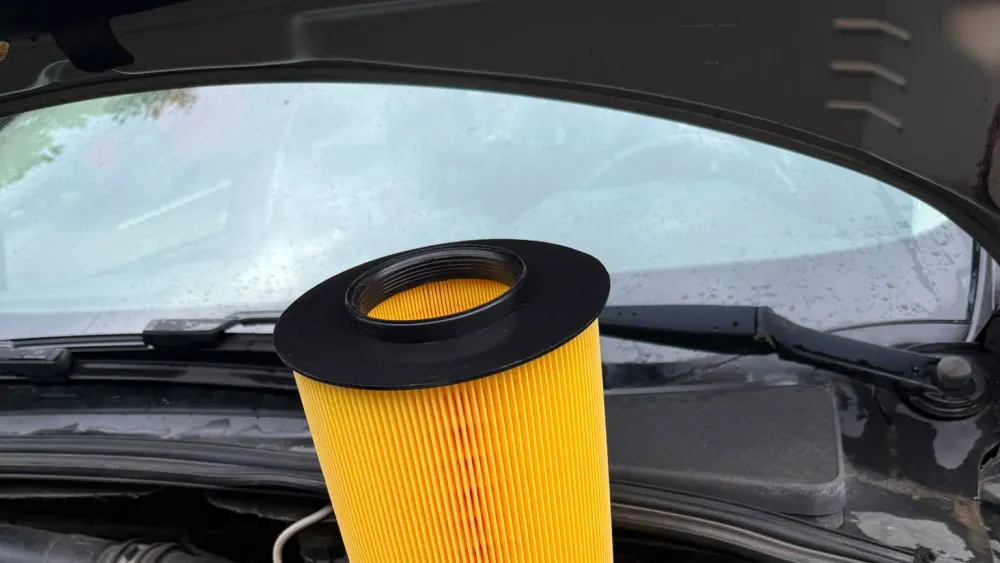
Absolutely. The oil filter is always changed together with the oil, regardless of mileage. Leaving the old filter with fresh oil is a common mistake that undoes most of the benefit of the change — contaminants and some used oil remain in the old filter and immediately worsen the quality of the freshly poured oil. The cost of a filter is small, so it is never worth saving on it.
Will a synthetic last longer than a year at low mileage?
Modern synthetic oils are more resistant to oxidation than cheaper mineral ones, but they too age with time and take on moisture. Better oil quality therefore does not cancel the yearly criterion — at most it means the oil survives that year in better condition. At low mileage the once-a-year rule still applies, regardless of whether the engine runs on a synthetic or a semi-synthetic.
If your car mostly sits and you use it only occasionally, an annual oil change is a sensible minimum that is easy to forget. To avoid wasting time on a workshop visit, you can use a mobile oil change with call-out — we come to the address you give, select the right oil and filter, and do everything on the spot. You will find a transparent price list on our website, so you know in advance exactly what you will pay.
Related services
Need an oil change?
We’ll come to your address or pick up your car and handle the rest. No queues.