
The battery in a hybrid and an electric car
A hybrid and an EV have two batteries: the traction one and an ordinary 12 V. Find out which one wears like in any car and why it immobilises the vehicle.
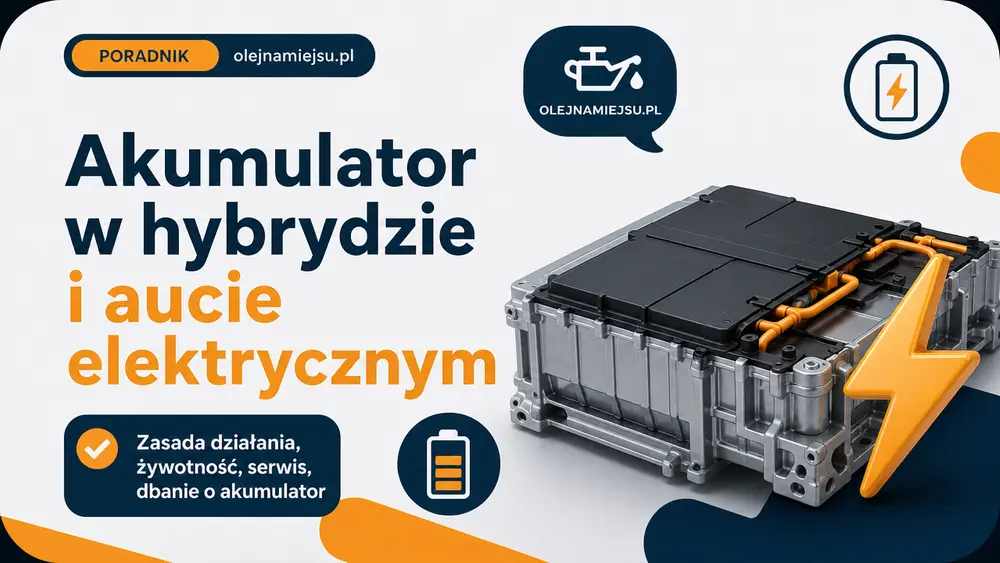
The battery in a hybrid and an electric car
7 min readMany hybrid and electric-car owners think that since the car has a big drive battery, an ordinary battery doesn’t concern them at all. It’s one of the most common misconceptions — in reality these vehicles have two entirely different batteries, and it’s the smaller and cheaper one that most often causes trouble and immobilises the car. We explain why this happens and how to look after it.
Two different batteries
The traction (high-voltage) battery drives the car and is an entirely separate system, serviced completely differently, at a voltage of hundreds of volts. Alongside it, though, is an ordinary 12 V battery that powers the electronics, computers and starting systems — and it wears out exactly like in any combustion car, because it’s simply the same lead-acid or AGM battery known for decades.
This distinction is the most important thing in the whole topic. The traction battery is a large, high-voltage energy store, usually at several hundred volts, that powers the electric motors and is charged while driving and, in plug-in hybrids and EVs, from a socket. It’s serviced quite differently, and only trained mechanics have access to it, because working with high voltage is dangerous. This battery is designed for many years and hundreds of thousands of kilometres.
The 12 V battery, on the other hand, is exactly the same battery you know from every combustion car. It usually sits under the bonnet or in the boot and powers everything that isn’t the drive itself: lights, radio, computers, locks, the alarm and, crucially, all the electronics needed to “wake” the car and safely engage the high-voltage system. And it’s this modest, cheap battery, not the powerful drive battery, that is the most common source of morning starting problems.
It’s the 12 V battery that immobilises the car
Paradoxically, it’s not the powerful drive battery but the small 12 V one that most often stops a hybrid or EV “waking up” in the morning. Flat or worn, it cuts power to the electronics needed to start the whole system — and without that electronics the car can’t even engage the drive battery. In other words, a fully charged traction battery is of no use if the small 12 V hasn’t the strength to wake the computers.
- Traction battery — drives the car, a separate high-voltage system, not replaced like the 12 V
- 12 V battery — powers the electronics and “wakes” the whole car for driving
- In hybrids the 12 V battery is sometimes smaller, cheaper and more prone to discharge
- Its wear shows up exactly as in any ordinary combustion car
- It, not the drive battery, is what most often needs replacing
Why the 12 V battery in a hybrid fails so often
You might intuitively think that since a hybrid has a powerful drive battery, its ordinary 12 V has an easy life. In practice it’s exactly the opposite, and it follows directly from how these cars are built. The 12 V battery in a hybrid works differently and often far harder than in a classic combustion car.
First, in many hybrids the 12 V battery isn’t charged by a classic alternator but by a voltage converter from the high-voltage battery — and only when the car is actually switched on. Second, it’s sometimes smaller and of lower capacity than in a comparable combustion car, because it doesn’t have to turn a heavy starter, only to “wake” the electronics. Third, a modern hybrid is full of systems that draw current long after parking: alarms, connectivity modules, updates, memory retention. All this loads the small battery far more than commonly assumed.
The result is that the 12 V battery in a hybrid can go flat far faster, especially when the car stands unused for a long time or drives only short distances. It’s one of the most common and most surprising reasons why a seemingly modern, expensive car suddenly “won’t wake up” in the morning despite a charged drive battery.
This distinction also matters practically when calling for roadside help. A driver whose hybrid won’t start often panics needlessly, thinking of a costly drive-battery replacement. In most cases, though, all it takes is charging or replacing the ordinary 12 V battery — an inexpensive repair, the same as in any car.
In a hybrid and an EV it’s the modest 12 V battery, not the drive battery, that most often decides whether the car starts in the morning.
How to jump-start a hybrid with a flat 12 V
When the 12 V battery fails, a hybrid can be revived with jump leads, but with one very important caveat. You connect only to the 12 V system, using the dedicated starting points indicated by the manufacturer in the manual — never to the orange, high-voltage cables of the drive system, as that risks electrocution and damage to the car.
Importantly, the hybrid itself usually should not be used as a power donor for another car, because its small 12 V battery isn’t designed for it and could be damaged. After reviving a hybrid you don’t “crank a starter” as in a combustion car — it’s enough for the electronics to wake and smoothly take control of the whole drive system. If the 12 V battery goes flat repeatedly despite normal use, it’s a clear sign it’s already worn and needs replacing, not another charge.
How to look after the 12 V battery in a hybrid
Since it’s the 12 V battery that most often fails, it’s worth knowing how to extend its life. A few simple habits genuinely reduce the risk that one morning the car won’t wake up, especially if you use it irregularly.
- Don’t leave the car for whole weeks without switching it on — start it for a few dozen minutes now and then
- For a longer stand, consider connecting the 12 V battery to a smart maintenance charger
- Avoid using consumers with the car switched off, for example long radio listening while parked
- In winter, with irregular driving, check the battery’s condition before the frost season
- React to the first symptoms: sluggish waking of the electronics and 12 V battery messages
Especially at risk are cars used rarely and briefly — for example a family’s second car, or a plug-in hybrid charged from a socket and covering mostly short trips in electric mode. In such conditions the combustion engine rarely runs and the 12 V battery has no chance to charge up properly, slowly losing capacity. Paradoxically, it’s economical, green use that can be hardest on the small 12 V battery.
A 12 V change like in any car
The 12 V battery in a hybrid or EV is selected and replaced on the same principles as in a combustion car — allowing for the type and any registration. We’ll select the right battery and replace it with call-out.
It’s worth remembering that many hybrids and electric cars use an AGM or EFB battery, not an ordinary flooded one. This follows from the frequent charge and discharge cycles and a start-stop-like mode of operation. Choosing the right type matters here just as much as in a start-stop car — a cheaper, wrong battery will wear out quickly, and the car may not register the change. It’s another reason not to skimp on the type and replacement of this seemingly ordinary battery.
Frequently asked questions about the battery in a hybrid and EV
Does an EV even have a 12 V battery?
Yes, practically every electric car has a separate 12 V battery. It surprises some drivers but has a simple explanation: all the on-board electronics, lighting and safety systems are designed for 12 V, exactly as in combustion cars. The drive battery powers only the electric motors, while the 12 V battery handles “waking” and the daily operation of all the other on-board systems. That’s why a flat 12 V battery immobilises an electric car just as effectively as a hybrid or an ordinary combustion car.
Does the drive battery also need replacing like an ordinary battery?
Not on the same principles. The traction battery is designed for many years and hundreds of thousands of kilometres, and is usually covered by a separate, multi-year manufacturer warranty. Its capacity degrades very slowly and gradually, not “from one day to the next” like a flat 12 V battery. They are two entirely different systems with entirely different lifespans and ways of servicing, and shouldn’t be confused or compared.
The car stood for a month and won’t start. What happened?
Almost certainly the 12 V battery went flat, not the drive battery. During a long stand the on-board systems, such as the alarm, connectivity modules and memory retention, keep drawing a small current from the little battery, which isn’t charged during that time. So hybrids and EVs left unused for a long time are worth switching on for a few dozen minutes now and then, or, for a really long stand, connecting the 12 V battery to a smart charger.
How often is the 12 V battery replaced in a hybrid?
Much like in a combustion car, usually every 4–6 years, though with frequent short trips and long stands it can fail noticeably sooner. The wear symptoms are exactly the same as in any other car: sluggish “starting” of the electronics, trouble waking the car, dimming lights and 12 V battery messages on the dashboard. It’s not worth delaying, because a single worn 12 V battery can completely immobilise even a fully charged, technically sound hybrid or EV worth hundreds of thousands of złoty.
We’ll select and replace the 12 V battery in your hybrid or electric car with call-out to the address you give, allowing for the right battery type and the necessary registration in the car’s computer.
Related services
Need an oil change?
We’ll come to your address or pick up your car and handle the rest. No queues.