
What oil for a 1.6 HDi (PSA)? DPF and Low SAPS
What oil for a 1.6 HDi engine? Check the PSA B71 2290 standard, ACEA C2 class, 5W30 Low SAPS viscosity and why the wrong oil risks clogging the turbo and DPF.
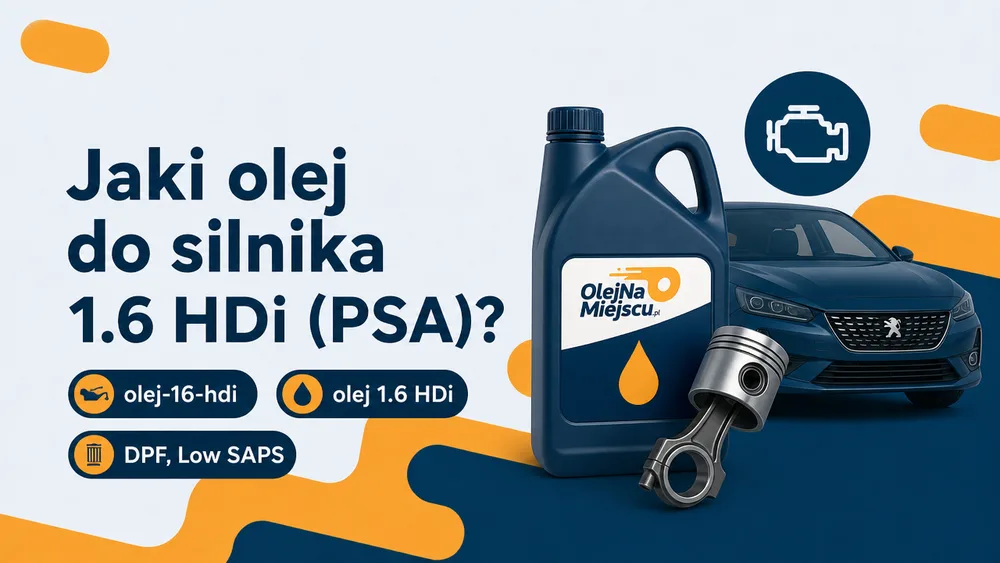
What oil for a 1.6 HDi (PSA)? DPF and Low SAPS
7 min readOil for a 1.6 HDi is one of the most important choices for the owner of this PSA-group diesel (Peugeot, Citroën, and also the Ford 1.6 TDCi). This engine can be sensitive to oil quality, especially where the turbocharger and particulate filter are concerned. We explain which standard and viscosity to choose and what to watch out for in particular.
1.6 HDi — why the oil is so important
The 1.6 HDi is a popular, economical diesel, but known for the turbocharger’s sensitivity to oil quality and cleanliness. Contaminated or unsuitable oil can clog the oil pickup screen and lead to turbo damage. That makes the right oil and a timely change critically important here.
PSA standard and ACEA class
For a 1.6 HDi with a DPF, a Low SAPS oil with reduced ash content is required. Most often this means a PSA standard (e.g. B71 2290) and ACEA C2 class, in 5W30 viscosity. Pouring ordinary oil into a car with a DPF is a straight road to clogging the filter.
- PSA standard (e.g. B71 2290) — confirm in the manual
- ACEA C2 class (Low SAPS) for cars with a DPF
- Viscosity most often 5W30
- Best selected by VIN or engine code
The DPF and regeneration versus the oil
In a 1.6 HDi with a particulate filter, during regeneration some fuel gets into the oil, diluting it and raising the level. That’s why Low SAPS oil and keeping to the interval are so important — especially with city driving, where regenerations are often interrupted.
Symptoms of bad or worn oil
React to the signals below before the turbo or DPF suffers:
- A rising oil level and a fuel smell in the oil (dilution)
- A drop in power and limp mode with DPF problems
- Noise or whistling from the turbocharger
- Thick, heavily contaminated oil
- More frequent, interrupted filter regenerations
What else to change at the same time
In the 1.6 HDi diesel it’s best to change the oil together with the filters — fuel and air cleanliness really matter for the injection system and the DPF:
- Oil filter — always with the oil
- Fuel filter — key to protecting the injection
- Air filter — affects running and performance
Changing the full set during a single visit saves time and gives you the certainty of comprehensive service.
The change interval in the 1.6 HDi
For this unit a sensible interval is 10,000–15,000 km, and with city driving closer to the lower limit. Shorter intervals reduce the risk of clogging the oil pickup screen and better protect the turbo.
In the 1.6 HDi, clean, correct Low SAPS oil and a timely change are the cheapest insurance for the turbocharger.
Frequently asked questions about oil for the 1.6 HDi
Can I pour ordinary 5W30 oil into a 1.6 HDi with a DPF?
No. A car with a DPF requires Low SAPS oil (ACEA C2 class and the right PSA standard). Ordinary oil leaves ash in the filter and speeds up its clogging.
Why is my oil level rising?
This is a common effect of the oil being diluted by fuel during DPF regeneration, especially on short trips. An excessively raised level is dangerous — another reason not to stretch the change.
How often to change the oil in a 1.6 HDi?
In practice every 10,000–15,000 km, and in the city closer to the lower limit, because of soot and the oil being diluted by fuel.
The oil pickup screen — the 1.6 HDi’s most famous weakness
If there’s one component of this engine that forums talk about most, it’s the oil pickup screen. It’s an unassuming mesh at the oil pump inlet, through which all the oil circulating in the engine passes. In the 1.6 HDi its mesh is exceptionally fine — and it’s the first thing to pay for neglected oil.
The failure mechanism is simple and predictable. Worn oil forms deposits and sludge. Those deposits gradually clog the screen, restricting flow. The pump can’t build proper pressure, and the first component to feel it is the turbocharger — because oil reaches its bearings by the longest and thinnest route. The result is a seized turbo in a car where “nothing hinted at a failure”.
The most important thing is that this failure is almost entirely avoidable. It needs no modification and no expensive additive — just clean, correct oil changed at a sensible interval. It’s one of those cases where prevention is absurdly cheap compared with the repair.
In a 1.6 HDi the turbo doesn’t fail “because that’s the engine”. The turbo fails because the oil pickup screen clogged — and it clogged from oil that wasn’t changed in time.
Fuel dilution — why the oil level rises
Owners of a 1.6 HDi with a DPF often notice something that seems illogical: the oil level on the dipstick doesn’t fall, it rises. That isn’t a measuring error or a reason to celebrate — it’s a symptom of the oil being diluted by fuel.
It happens during particulate-filter regeneration. To burn off the soot, the ECU injects extra fuel, and some of it runs down the cylinder walls into the sump. If the regeneration is interrupted — because you reached your destination and switched the engine off — the process doesn’t finish and the fuel stays in the oil. With city-only driving the situation repeats again and again.
- The oil level on the dipstick rises above the MAX mark
- The oil smells of fuel and is noticeably thinner
- DPF regenerations start more and more often
- Diluted oil lubricates worse and loses its properties faster
Oil diluted with fuel loses viscosity and the ability to maintain a lubricating film exactly when the turbo needs it most. On top of that comes the risk of overfilling the system, which is dangerous in itself. That’s why in this engine checking the oil level isn’t a formality, and a level above MAX is a reason to act, not to ignore.
How to drive a 1.6 HDi and avoid trouble
- Don’t shorten the interval only on paper — in the city stick to the lower limit of 10,000 km
- Every now and then take a longer drive so the DPF can finish a regeneration
- Check the oil level regularly and react when it rises
- Change the fuel filter as recommended — it protects the injectors
- Don’t skimp on oil: it must have the PSA standard and Low SAPS class
It’s also worth remembering that this engine was fitted not only in Peugeots and Citroëns but also in Fords as the 1.6 TDCi, and in some Volvos and Mazdas. The design is the same, so the same rules apply regardless of the badge on the bonnet — the oil requirements come from the engine, not from the make of car.
Is it worth cleaning the oil pickup screen as a precaution?
In examples with an unknown service history it can be sensible, but it doesn’t replace regular changes. Cleaning the screen is a one-off job that removes the effect, not the cause. If you go back to stretched changes afterwards, the screen will clog again. The cheapest and most effective prevention remains fresh, correct oil.
I’m buying a used car with a 1.6 HDi — what should I look at?
Ask directly about the oil-change history and whether the turbo has already been replaced. Check the oil level on the dipstick: if it’s above MAX and smells of fuel, the car was driven mainly in the city with interrupted regenerations. Whatever the seller says, an oil and filter change right after purchase is the cheapest insurance you can buy here.
The symptoms that reveal oil trouble in a 1.6 HDi
This engine rarely fails without warning. The trouble is that its signals are subtle and easy to ignore, especially when the car still drives normally. The sooner you catch them, the better the chance it ends with an oil change rather than a turbocharger replacement.
- A whistle or whine rising with engine speed — the first signal from the turbo
- Bluish smoke from the exhaust, especially when accelerating
- A drop in power and going into limp mode
- An illuminated oil pressure light — that’s an order to stop at once
- A rising oil level and a noticeable smell of fuel on the dipstick
- More and more frequent, interrupted filter regenerations
The oil pressure light is especially dangerous. In this engine it often means the pickup screen is already clogged and the pump can’t build the required pressure. Driving on, even for a few kilometres, can decide the fate of the turbocharger and the whole unit.
What neglect really costs
It’s worth setting two figures side by side, because the difference explains everything better than any appeal. An oil and filter change in this engine costs a few hundred zlotys, done once a year or two. Reconditioning or replacing a turbocharger runs into thousands — and if debris from the seized turbine reaches the engine, the bill grows further still.
On top of that comes the particulate filter, which clogs faster on the wrong oil. Replacing it is another serious expense that can be avoided simply by using Low SAPS oil with the right PSA standard. In a 1.6 HDi, saving on oil isn’t saving — it’s deferring a much bigger invoice.
In a 1.6 HDi an oil change costs a fraction of the price of a turbocharger. It’s one of the best price-to-protection ratios in all of motoring.
We’ll select the oil for your 1.6 HDi with call-out
During a mobile oil change we’ll select a Low SAPS oil with the right PSA standard for your 1.6 HDi and change the filter at the address given — no queues.
See the price list or book a time online — we’ll come with the selected oil and the filters.
Related services
Need an oil change?
We’ll come to your address and handle the rest. No queues, no garage.