How often should you change the oil in a diesel?
A diesel stresses the oil more than petrol — soot, the DPF and high temperatures shorten the interval. Find out how often to change the oil in a diesel engine.

How often should you change the oil in a diesel?
7 min readChanging the oil in a diesel follows slightly different rules than in a petrol car. A diesel engine puts more strain on the oil, so timing matters even more here. Skipping changes in a diesel bites back faster and harder, because it leads not only to engine wear but also to problems with the expensive DPF filter and the turbocharger. In this article we explain how often you really should change the oil in a diesel and what it depends on.
Recommended interval for a diesel
Most often we’re talking about a change every 10,000–15,000 km or once a year. In practice, for city cars and those with a DPF filter, it’s wiser to stick to the lower limit, i.e. 8,000–10,000 km. This recommendation comes from real-world use, not excessive caution — in tough conditions the oil in a diesel ages far faster than the mileage alone would suggest.
It is worth distinguishing two situations. Manufacturers often quote so-called extended service intervals, reaching 25,000–30,000 km, calculated by the onboard computer based on driving style. Such intervals make sense mainly for motorway driving, over long, even distances. For a car driven mostly in town, on short stretches and in traffic jams, they are decidedly too long and really do shorten engine life. That is why many mechanics recommend halving the factory interval if the car works in such conditions.
Why does a diesel use up oil faster?
- More soot getting into the oil
- DPF regeneration dilutes the oil with fuel
- Higher combustion pressures and temperatures
- Frequent city driving shortening regeneration cycles
The key problem is soot. A compression-ignition engine naturally produces far more of it than a petrol one, and some of it inevitably ends up in the oil, gradually contaminating and thickening it. Over time the oil turns into a black, thick sludge that lubricates worse and carries away heat less effectively. The more soot there is, the faster the oil loses its properties, which is why in a diesel its condition deteriorates markedly sooner than in a comparable petrol engine.
The second important factor is DPF regeneration. During it, an extra dose of fuel is injected into the cylinders, part of which runs down the walls into the sump and dilutes the oil. Oil diluted with fuel has a lower viscosity and protects the engine worse, and with frequent, interrupted regenerations — typical of city driving — the problem intensifies. This is exactly why short trips are especially unfavourable for a diesel.
What shortens the interval in practice
Not every diesel uses up oil at the same rate. What really decides how often you have to change it is above all the way the car is used. The factors below shorten the safe interval most and are worth knowing when planning a service.
- Driving mainly in town, on short stretches
- Frequent, interrupted DPF regenerations
- Towing a trailer and driving under heavy load
- Lots of starts and stops, little steady-speed driving
- Poorer-quality fuel and a cold climate
If you recognise your driving style in this, it is safer to stick to the lower end of the interval or even to shorten it. A car regularly covering longer, motorway distances uses up oil more slowly, because the engine works at its optimal temperature and DPF regenerations run to completion. Two identical diesels can therefore need an oil change at completely different intervals, depending on how and where they are driven. That is why mileage alone can be a misleading guide, and it is far better to look at the real operating conditions.
It is also good practice to watch the calendar, not just the odometer. Even if the car is driven little, the oil ages chemically over time and absorbs moisture, so a change at least once a year is recommended regardless of the distance covered. In a diesel that stands a lot and drives short distances, it is precisely the time criterion that is often more important than the kilometres travelled.
Soot and fuel dilution — what happens to the oil
To understand why the interval in a diesel can be so short, it is worth looking more closely at the two processes that destroy the oil most. The first is the build-up of soot. In a compression-ignition engine combustion happens at high pressure and with excess air, but even so some of the fuel burns incompletely, forming fine soot particles. Although most of them go to the exhaust system, a certain amount slips past the piston rings into the sump. There the soot accumulates in the oil, increasing its density and abrasiveness.
The second process is the fuel dilution mentioned earlier. Modern diesels periodically burn off the accumulated soot from the DPF filter in a regeneration process, raising the exhaust temperature with an extra fuel injection. If the drive is too short, the regeneration doesn’t manage to finish, and the unburnt fuel runs down into the oil. Successive interrupted cycles mean fuel builds up in the sump, the oil level rises and its viscosity drops. In extreme cases heavily diluted oil loses its lubricating ability to the point of threatening the turbo and the bearings.
Both of these phenomena intensify in exactly the same conditions: city driving, on short trips, with a cold engine and frequent stops. That is why a diesel used mainly in town needs more frequent oil changes, even though it covers few kilometres a year. Paradoxically, such a car tires the oil more than one covering twice as much but in calm motorway driving.
Oil for a diesel with DPF
Modern diesels with a particulate filter use Low SAPS oils, with a reduced ash content. The wrong oil choice can clog the DPF. If you’re not sure which oil to choose, we’ll help you match the product to your engine’s specification.
The sulphated-ash content, marked with the abbreviation SAPS, is crucial here. Ash doesn’t burn off in the particulate filter and over time clogs it irreversibly. Low SAPS oil limits this process, extending the DPF’s life. That is why in a modern diesel you must not pour in just any oil of the right viscosity — it has to meet a specific standard and manufacturer approval, for example from the ACEA C family. Using an ordinary high-ash oil is a straight road to a costly filter replacement.
The role of the oil filter and a fresh fuel filter
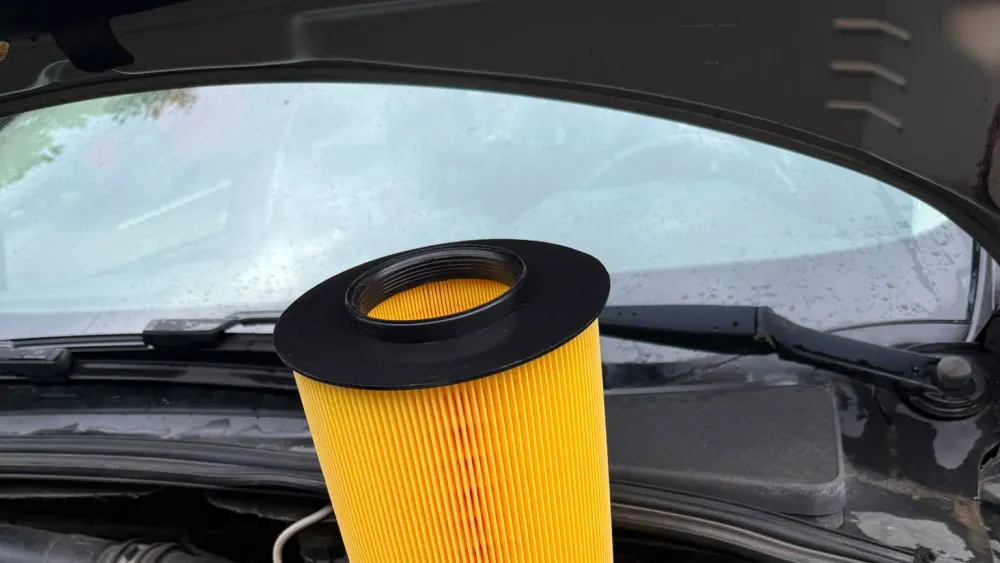
In a diesel, changing the oil alone is not everything — the oil filter, which catches the soot and particles of contamination circulating in the system, matters just as much. A clogged filter stops cleaning the oil effectively, and in extreme cases the bypass valve opens and unfiltered oil reaches the engine. That is why the oil filter is always changed together with the oil, never “every other change”.
When servicing the oil, it is also worth thinking about the other filters. The fuel filter in a diesel is particularly important, because it protects the precise and costly injection equipment from contamination and water. A neglected fuel filter can cause a loss of power, jerking and hard starting. A comprehensive service covering the oil and a set of filters is the simplest way to keep a diesel in good shape.
Signs the oil in a diesel needs changing
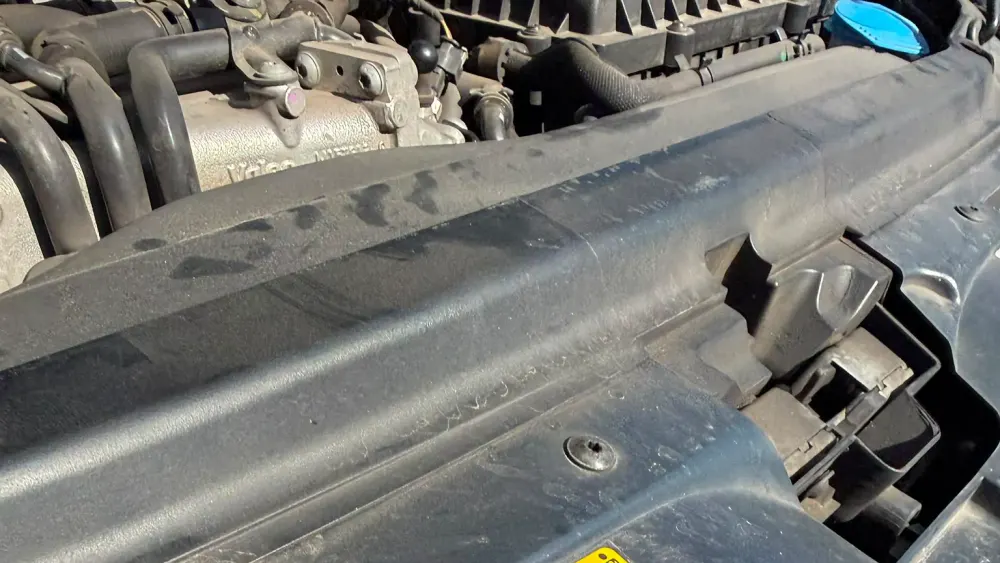
Beyond the mileage itself, it is worth watching for signals that reveal the oil has lost condition. Excessively black, thin oil on the dipstick, a noticeable smell of fuel, an oil level rising above maximum or a louder-running engine are signs it isn’t worth waiting for a “round” mileage. A rising oil level in particular is characteristic of diesels and means dilution with fuel during regeneration.
When in doubt, it is better to change the oil a little earlier than to exceed the safe interval. Oil is the cheapest element of engine protection, and changing it regularly is many times cheaper than repairing the turbocharger, replacing the DPF or overhauling the engine. In a diesel this rule applies with particular force.
Can you use extended intervals in a diesel?
You can, but only when the car drives in the conditions those intervals are designed for — that is, mainly on the open road, over long distances at a steady speed. With city driving, short stretches and frequent DPF regenerations, an extended interval really harms the engine. In such conditions it is wiser to change the oil more often than the onboard computer suggests.
Can you put petrol oil in a diesel?
You shouldn’t. Diesels, especially with a DPF, need oil of the right specification and reduced ash content. Oil intended solely for petrol may have too high an ash content and lead to clogging the particulate filter. You should always use oil compliant with the standard and approval given by the engine manufacturer.
Do short trips really harm a diesel that much?
Yes, and more than many drivers suppose. On a short stretch the engine and oil don’t reach full operating temperature, so water vapour and fuel don’t evaporate from the oil, and DPF regeneration often doesn’t finish. The result is faster dilution and contamination of the oil and a risk of clogging the particulate filter. For this driving style a diesel can even be a worse choice than petrol, and if one has been chosen, all the more diligently must the short change intervals be kept.
How can you tell the interval was too long?
The most common signs are very dark, thick oil or, on the contrary, thin oil smelling of fuel, a level rising above maximum on the dipstick and a louder, less refined engine. Sometimes there are also problems with DPF regeneration and a drop in performance. If you notice these symptoms, it isn’t worth waiting for the planned change — better to change the oil right away and check the state of the particulate filter while you’re at it.
A mobile oil and filter change includes selecting the right oil (Castrol, Shell, Mobil, Motul) and replacing the oil filter — all at your address, with no queues.
Related services
Need an oil change?
We’ll come to your address or pick up your car and handle the rest. No queues.