
Peugeot 308 II (2013–2021) — engines and servicing
All engine versions of the Peugeot 308 II (2013–2021) with engine codes — plus servicing: mobile oil change, timing belt, brakes, clutch. Siechnice near Wrocław.
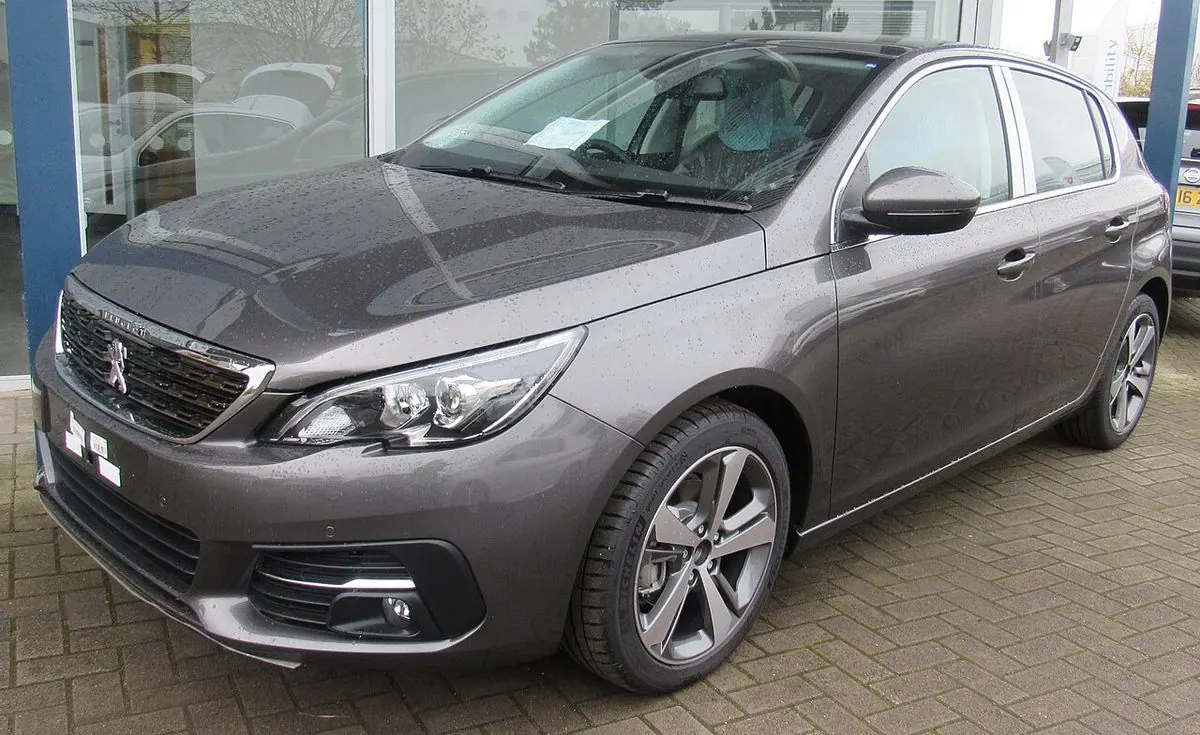
Photo: Vauxford, CC BY-SA 4.0, Wikimedia Commons
Peugeot 308 II: produced 2013–2021. Body styles: hatchback van, estate (codes LB, LP, LW, LH, L3, LC). This generation has 38 engine versions: 20 diesel and 18 petrol. Power from 60 to 200 kW (82–272 hp), displacement from 1.2 to 2.0 l. Engine codes: HMZ (EB2F), HNZ (EB2DT), HNV (EB2DTM), HNP (EB2ADT), HNY (EB2DTS), HNS (EB2ADTS), NFP (EC5), 5FA (EP6CDT), 5GX (EP6FDTMD), 5FV (EP6CDT) and 19 others. The tables below group the versions by fuel type.
Previous generation: 308 I (2007–2016). Next: 308 III (from 2021).
We service the Peugeot 308 II
Mobile oil changes at your address in and around Wrocław, or a full service in our Siechnice workshop — timing belts, brakes, suspension, air conditioning and diagnostics. We match oil and parts to your VIN.
About the Peugeot 308 II
The Peugeot 308 II was built from 2013 to 2021, with a facelift in 2017. It came as a hatchback and estate (SW). It is a lighter and more economical car than its predecessor, with modern PureTech and BlueHDi engines. In Poland it is popular in fleets and with families.
Engines — which to choose
The most common are the petrol 1.2 PureTech (EB2) and 1.6 THP (EP6), and the diesel 1.6 BlueHDi (DV6), 1.5 BlueHDi (DV5) and 2.0 BlueHDi (DW10). The 1.2 PureTech has a wet timing belt, which in the early series could degrade. The BlueHDi engines are economical, but come with a DPF and AdBlue. The 1.6 THP is better developed than in the predecessor.
Peugeot 308 II engine versions
The engine code is usually in the service book or on the plate in the engine bay — if you don’t know it, the VIN is enough when you book. We will fill in the consumption and cost-per-100-km columns from drivers’ reports; until then we show “no reports yet”.
Petrol engines (18)
| Version | Engine code | Capacity | Years | Real-world consumption | Cost per 100 km | Reports |
|---|---|---|---|---|---|---|
| 1.2 VTi 72 82 hp (60 kW) | HMZ (EB2F) | 1199 cc | 2013–2021 | no reports yet | — | 0 |
| 1.2 THP 110 110 hp (81 kW) | HNZ (EB2DT), HNV (EB2DTM), HNP (EB2ADT) | 1199 cc | 2013–2021 | no reports yet | — | 0 |
| 1.2 THP 130 131 hp (96 kW) | HNY (EB2DTS), HNS (EB2ADTS) | 1199 cc | 2013–2021 | no reports yet | — | 0 |
| 1.6 VTi (LWNFPA) 115 hp (85 kW) | NFP (EC5) | 1587 cc | 2014–2021 | no reports yet | — | 0 |
| 1.6 VTi 115 115 hp (85 kW) | NFP (EC5) | 1587 cc | 2015–2021 | no reports yet | — | 0 |
| 1.6 THP 125 125 hp (92 kW) | 5FA (EP6CDT) | 1598 cc | 2013–2021 | no reports yet | — | 0 |
| 1.6 THP 150 150 hp (110 kW) | 5GX (EP6FDTMD) | 1598 cc | 2014–2021 | no reports yet | — | 0 |
| 1.6 THP 150 (L45GXA) 150 hp (110 kW) | 5GX (EP6FDTMD) | 1598 cc | 2014–2021 | no reports yet | — | 0 |
| 1.6 THP 152 hp (112 kW) | 5GX (EP6FDTMD) | 1598 cc | 2013–2021 | no reports yet | — | 0 |
| 1.6 THP 156 hp (115 kW) | 5FV (EP6CDT) | 1598 cc | 2013–2021 | no reports yet | — | 0 |
| 1.6 THP 155 156 hp (115 kW) | 5FV (EP6CDT) | 1598 cc | 2014–2021 | no reports yet | — | 0 |
| 1.6 THP 163 163 hp (120 kW) | 5FM (EP6CDTM) | 1598 cc | 2014–2021 | no reports yet | — | 0 |
| 1.6 GT 205 205 hp (151 kW) | 5GT (EP6FDTX) | 1598 cc | 2014–2021 | no reports yet | — | 0 |
| 1.6 PureTech 225 225 hp (165 kW) | GGR (EP6FADTX) | 1598 cc | 2018–2021 | no reports yet | — | 0 |
| 1.6 PureTech 225 (L45GGR) 225 hp (165 kW) | 5GG (EP6FADTX) | 1598 cc | 2018–2021 | no reports yet | — | 0 |
| 1.6 GTi 250 hp (184 kW) | 5GP (EP6FDTR) | 1598 cc | 2015–2021 | no reports yet | — | 0 |
| 1.6 GTi PureTech 263 (L3EGXP) 263 hp (193 kW) | EGX (EP6FADTR) | 1598 cc | 2018–2021 | no reports yet | — | 0 |
| 1.6 GTi (L35GNH) 272 hp (200 kW) | 5GN (EP6FDTR) | 1598 cc | 2015–2021 | no reports yet | — | 0 |
Diesel engines (20)
| Version | Engine code | Capacity | Years | Real-world consumption | Cost per 100 km | Reports |
|---|---|---|---|---|---|---|
| 1.5 BlueHDi 100 102 hp (75 kW) | YHY (DV5RD) | 1499 cc | 2018–2021 | no reports yet | — | 0 |
| 1.5 BlueHDi 130 131 hp (96 kW) | YHZ (DV5RC) | 1499 cc | 2017–2021 | no reports yet | — | 0 |
| 1.5 BlueHDi 130 (LBYHZP) 131 hp (96 kW) | YHZ (DV5RC) | 1499 cc | 2017–2021 | no reports yet | — | 0 |
| 1.5 BlueHDi 130 (LCYHZP) 131 hp (96 kW) | YHZ (DV5RC) | 1499 cc | 2017–2021 | no reports yet | — | 0 |
| 1.6 HDi 92 hp (68 kW) | 9HP (DV6DTED) | 1560 cc | 2013–2021 | no reports yet | — | 0 |
| 1.6 HDi 92 92 hp (68 kW) | 9HP (DV6DTED) | 1560 cc | 2014–2021 | no reports yet | — | 0 |
| 1.6 HDi 100 99 hp (73 kW) | BHY (DV6FD) | 1560 cc | 2014–2021 | no reports yet | — | 0 |
| 1.6 BlueHDi 99 hp (73 kW) | BHY (DV6FD) | 1560 cc | 2014–2021 | no reports yet | — | 0 |
| 1.6 BlueHDi 100 99 hp (73 kW) | BHY (DV6FD) | 1560 cc | 2014–2021 | no reports yet | — | 0 |
| 1.6 HDi 115/BlueHDi 115 115 hp (85 kW) | BHZ (DV6FC), BHX (DV6FC), 9HC (DV6C) | 1560 cc | 2013–2021 | no reports yet | — | 0 |
| 1.6 HDi 115/BlueHDi 115 (LCBHXM, LCBHXT) 115 hp (85 kW) | BHZ (DV6FC), BHX (DV6FC), 9HC (DV6C) | 1560 cc | 2014–2021 | no reports yet | — | 0 |
| 1.6 e-HDi 115 (LB9HCG) 116 hp (85 kW) | 9HC (DV6C) | 1560 cc | 2015–2021 | no reports yet | — | 0 |
| 1.6 BlueHDi 120 120 hp (88 kW) | BHZ (DV6FC) | 1560 cc | 2013–2021 | no reports yet | — | 0 |
| 1.6 BlueHDi 120 (LBBHZM) 120 hp (88 kW) | BHX (DV6FC) | 1560 cc | 2015–2021 | no reports yet | — | 0 |
| 2.0 BlueHDi 150 150 hp (110 kW) | AHX (DW10FD), AHX (DW10FCD) | 1997 cc | 2013–2021 | no reports yet | — | 0 |
| 2.0 BlueHDi 150 150 hp (110 kW) | AHR (DW10FD), AHX (DW10FCD) | 1997 cc | 2014–2021 | no reports yet | — | 0 |
| 2.0 GT BlueHDi 180 177 hp (130 kW) | EHZ (DW10FC) | 1997 cc | 2017–2021 | no reports yet | — | 0 |
| 2.0 GT BlueHDi 180 179 hp (132 kW) | AHW (DW10FC) | 1997 cc | 2017–2021 | no reports yet | — | 0 |
| 2.0 GT BlueHDi 180 181 hp (133 kW) | AHW (DW10FC) | 1997 cc | 2014–2021 | no reports yet | — | 0 |
| 2.0 GT HDi 180/BlueHDi 180 181 hp (133 kW) | AHW (DW10FC) | 1997 cc | 2014–2021 | no reports yet | — | 0 |
Common problems of the Peugeot 308 II
Wet belt in the 1.2 PureTech
The belt runs in oil. Its degradation can clog the oil pickup strainer and destroy the engine. The manufacturer revised its recommendations, so we check the current guidelines for the given VIN.
DPF and AdBlue in the BlueHDi
Short trips clog the filter, and the SCR system reports faults.
Oil consumption in the PureTech
The engine can consume oil, so we check the level often.
EAT6/EAT8 automatic
Requires a gearbox oil change.
Servicing and oil for the Peugeot 308 II
In the 308 II, PureTech and THP engines run on oil meeting PSA B71 2312 (0W-30) or B71 2290 depending on the engine, and BlueHDi diesels on low-ash ACEA C2/C3 oil as recommended for the given VIN. Timing drive: a wet belt in the 1.2 PureTech, a belt in the BlueHDi (the 1.5 also has a short chain in the cylinder head), a chain in the 1.6 THP and PureTech. We change the oil every 10 thousand km. We set the belt replacement interval according to the current recommendations for the given VIN.
Mechanic’s tip
With a 308 II with the PureTech, ask about the oil and belt history. Do not stretch the intervals, even if the on-board computer allows it.
Guides for the Peugeot 308 II
Driver reviews and fuel consumption — Peugeot 308 II
Do you drive this car? Tell others how much it uses and what you think of it.
No one has reviewed this car yet. Be the first — fuel consumption or a few sentences is enough.
What we do on the Peugeot 308 II
- Mobile oil and filter change
oil matched to the engine code — at your home or workplace
- Timing belt / chain replacement
belt or chain, with tensioners, rollers and water pump
- Brakes
discs, pads and brake fluid for Peugeot 308 II
- Suspension
shock absorbers, wishbones, bushes, anti-roll bar links
- Clutch and dual-mass flywheel
judder, slipping, noise when pulling away
- Computer diagnostics
reading and clearing fault codes, live data
- Air conditioning
regas, disinfection, cabin filter
- 3D wheel alignment
after suspension work and for uneven tyre wear
- Mobile battery replacement
replaced while keeping the car’s memory settings
- Pre-purchase inspection
an assessment of Peugeot 308 II before you buy
Frequently asked questions — Peugeot 308 II
Yes. We service the Peugeot 308 II (2013–2021) at our workshop at ul. Zielona 40 in Siechnice near Wrocław. We can change oil, filters and the battery at your location — at home or at work, in Wrocław and the surrounding area. Book by calling +48 572 478 850 or online.
38 versions: 20 diesel and 18 petrol. Power from 60 to 200 kW (82–272 hp). Engine codes you will meet in this generation: HMZ (EB2F), HNZ (EB2DT), HNV (EB2DTM), HNP (EB2ADT), HNY (EB2DTS), HNS (EB2ADTS), NFP (EC5), 5FA (EP6CDT), 5GX (EP6FDTMD), 5FV (EP6CDT), 5FM (EP6CDTM), 5GT (EP6FDTX)…. The full table with displacement and production years is higher up on this page.
In the 308 II, PureTech and THP engines run on oil meeting PSA B71 2312 (0W-30) or B71 2290 depending on the engine, and BlueHDi diesels on low-ash ACEA C2/C3 oil as recommended for the given VIN. Timing drive: a wet belt in the 1.2 PureTech, a belt in the BlueHDi (the 1.5 also has a short chain in the cylinder head), a chain in the 1.6 THP and PureTech. We change the oil every 10 thousand km. We set the belt replacement interval according to the current recommendations for the given VIN. When you book, give us the registration number or VIN — we will choose the oil and filters for your engine.
It depends on the particular engine — this generation has different designs, and the replacement interval is set by the manufacturer for each engine code. Give us the VIN when you book and we will check what timing drive your car has and when it is due. We usually replace it as a kit with the tensioner, rollers and water pump.
Wet belt in the 1.2 PureTech; DPF and AdBlue in the BlueHDi; Oil consumption in the PureTech; EAT6/EAT8 automatic. We describe the details in the “Common problems” section on this page.
No. You can have services and repairs done at a garage of your choice, provided they follow the manufacturer’s recommendations and are documented — that is what EU rules (the block exemption regulation) say. We issue full documentation, and you can see your visit history in the customer portal.
Peugeot 308 II servicing — book a visit
A workshop in Siechnice near Wrocław and mobile oil changes at your door. Tell us what is wrong with the car — we will agree the scope and date, and you get a quote before work begins.
Other Peugeot 308 generations
All Peugeot 308 generations · Peugeot servicing — all models · All car brands
OlejNaMiejscu.pl is an independent multi-brand workshop, not affiliated with any car manufacturer. We use make and model names only to show which cars we service. The list of engine versions is indicative — before any repair we check your actual car by its VIN.