
Volkswagen Golf VII (2012–2022) — engines and servicing
All engine versions of the Volkswagen Golf VII (2012–2022) with engine codes — plus servicing: mobile oil change, timing belt, brakes, clutch. Siechnice near Wrocław.
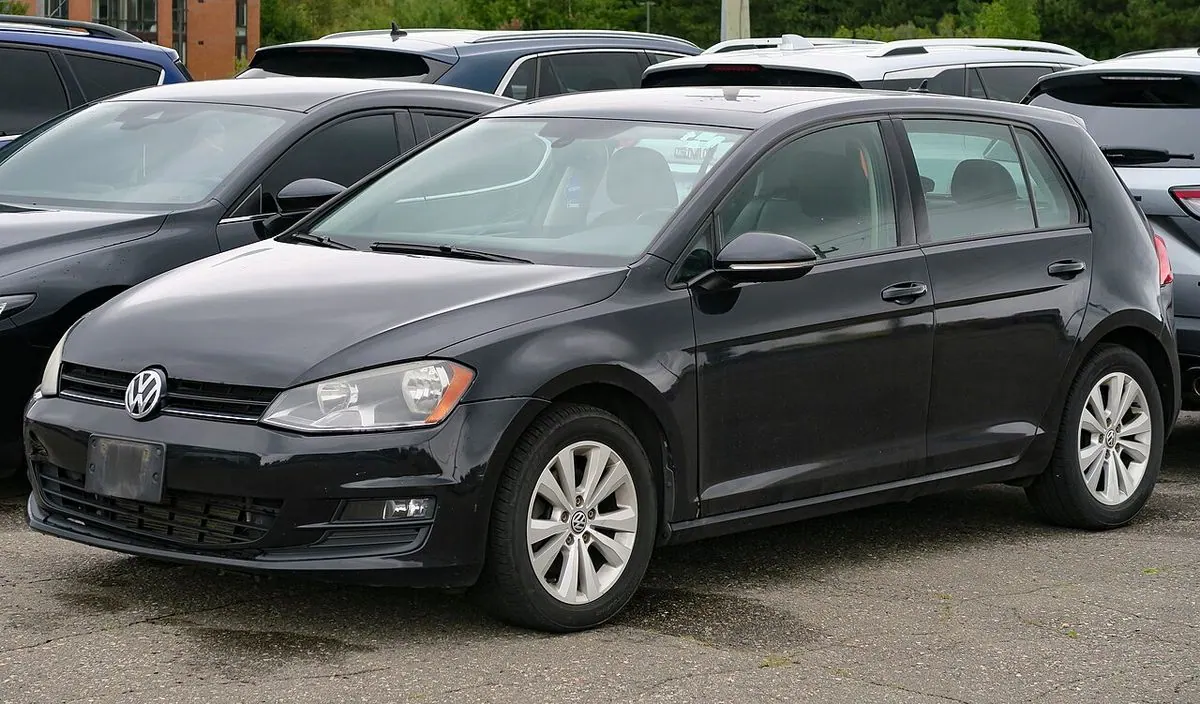
Photo: Elise240SX, CC BY-SA 4.0, Wikimedia Commons
Volkswagen Golf VII: produced 2012–2022. Body styles: van, estate (codes 5G1, BQ1, BE1, BE2, BA5, BV5). This generation has 64 engine versions: 35 petrol, 21 diesel, 3 with factory CNG, 2 electric, 1 hybrid and 2 other. Power from 63 to 265 kW (86–360 hp), displacement from 1.0 to 2.0 l. Engine codes: CHZK, DKLB, CHZC, CHZD, DKRF, CJZB, CYVA, CJZA, CYVB, CMBA and 80 others. The tables below group the versions by fuel type.
Previous generation: Golf VI (2008–2017). Next: Golf VIII (from 2019).
We service the Volkswagen Golf VII
Mobile oil changes at your address in and around Wrocław, or a full service in our Siechnice workshop — timing belts, brakes, suspension, air conditioning and diagnostics. We match oil and parts to your VIN.
About the Volkswagen Golf VII
The Golf VII (type 5G) appeared in 2012 on the MQB platform and was built until 2019, with the estate until 2020 and the convertible and GTE a little longer. After the 2017 facelift it got a larger screen and newer engines, including the 1.5 TSI. In Poland it is a very common car from leasing and fleets.
Engines — which to choose
The most popular petrol engines are the 1.2 TSI (CJZA), 1.4 TSI (CZCA, CZEA) and 1.0 TSI, and after the facelift the 1.5 TSI. Diesels: the 1.6 TDI (CLHA, DDYA) and 2.0 TDI (CRLB, DFGA). These are generally very successful engines with good fuel economy; the 140 hp version of the 1.4 TSI has cylinder deactivation (ACT). On the diesels we watch the particulate filter and the oil, because on short trips fuel dilutes the oil. TSI engines from the EA211 family have a timing belt, so the replacement date has to be watched.
Volkswagen Golf VII engine versions
The engine code is usually in the service book or on the plate in the engine bay — if you don’t know it, the VIN is enough when you book. We will fill in the consumption and cost-per-100-km columns from drivers’ reports; until then we show “no reports yet”.
Petrol engines (37)
| Version | Engine code | Capacity | Years | Real-world consumption | Cost per 100 km | Reports |
|---|---|---|---|---|---|---|
| 1.0 TSI 86 hp (63 kW) | CHZK, DKLB | 999 cc | 2017–2019 | no reports yet | — | 0 |
| 1.0 TSI 110 hp (81 kW) | CHZC | 999 cc | 2016–2020 | no reports yet | — | 0 |
| 1.0 TSI 115 hp (85 kW) | CHZD, DKRF | 999 cc | 2015–2020 | no reports yet | — | 0 |
| 1.2 TSI 86 hp (63 kW) | CJZB, CYVA | 1197 cc | 2012–2017 | no reports yet | — | 0 |
| 1.2 TSI 86 hp (63 kW) | CJZB | 1197 cc | 2012–2017 | no reports yet | — | 0 |
| 1.2 TSI 105 hp (77 kW) | CJZA | 1197 cc | 2012–2020 | no reports yet | — | 0 |
| 1.2 TSI 110 hp (81 kW) | CYVB | 1197 cc | 2014–2017 | no reports yet | — | 0 |
| 1.4 TSI 122 hp (90 kW) | CMBA, CXSA | 1395 cc | 2012–2017 | no reports yet | — | 0 |
| 1.4 TSI MultiFuel 122 hp (90 kW)petrol/ethanol | CPVA | 1395 cc | 2012–2017 | no reports yet | — | 0 |
| 1.4 TSI 122 hp (90 kW) | CXSA | 1395 cc | 2013–2017 | no reports yet | — | 0 |
| 1.4 TSI MultiFuel 125 hp (92 kW)petrol/ethanol | CPVB | 1395 cc | 2013–2018 | no reports yet | — | 0 |
| 1.4 TSI 125 hp (92 kW) | CZCA | 1395 cc | 2014–2020 | no reports yet | — | 0 |
| 1.4 TSI 125 hp (92 kW) | CZCA, CZDD | 1395 cc | 2014–2020 | no reports yet | — | 0 |
| 1.4 TSI 140 hp (103 kW) | CPTA, CHPA | 1395 cc | 2012–2020 | no reports yet | — | 0 |
| 1.4 TSI 140 hp (103 kW) | CHPA | 1395 cc | 2012–2020 | no reports yet | — | 0 |
| 1.4 TSI 150 hp (110 kW) | DGXA, CZEA, CZDA | 1395 cc | 2014–2021 | no reports yet | — | 0 |
| 1.4 TSI 150 hp (110 kW) | DGXA, CHPB, CZDA | 1395 cc | 2014–2021 | no reports yet | — | 0 |
| 1.5 TSI 130 hp (96 kW) | DACA, DPBA | 1495 cc | 2017–2020 | no reports yet | — | 0 |
| 1.5 TSI 150 hp (110 kW) | DADA, DPCA | 1498 cc | 2017–2020 | no reports yet | — | 0 |
| 1.6 110 hp (81 kW) | CWVA | 1598 cc | 2014–2017 | no reports yet | — | 0 |
| 1.8 TSI 170 hp (125 kW) | CXBA, CXBB, CNSA, CNSB | 1798 cc | 2013–2017 | no reports yet | — | 0 |
| 1.8 TSI 4MOTION 170 hp (125 kW) | CXBA, CXBB | 1798 cc | 2017 | no reports yet | — | 0 |
| 2.0 GTI 210 hp (155 kW) | CNTA, CXCA | 1984 cc | 2013–2017 | no reports yet | — | 0 |
| 2.0 GTI 220 hp (162 kW) | CHHB, CXDA, CXCB, CNTC | 1984 cc | 2013–2020 | no reports yet | — | 0 |
| 2.0 GTI 220 hp (162 kW) | CHHB | 1984 cc | 2013–2017 | no reports yet | — | 0 |
| 2.0 GTI 230 hp (169 kW) | CHHA | 1984 cc | 2013–2020 | no reports yet | — | 0 |
| 2.0 GTI 231 hp (170 kW) | DKFA | 1984 cc | 2018–2021 | no reports yet | — | 0 |
| 2.0 GTI 245 hp (180 kW) | DLBA, DKTB | 1984 cc | 2017–2020 | no reports yet | — | 0 |
| 2.0 GTI Clubsport 265 hp (195 kW) | CJXE | 1984 cc | 2016–2017 | no reports yet | — | 0 |
| 2.0 R 4MOTION 280 hp (206 kW) | CJXB | 1984 cc | 2013–2017 | no reports yet | — | 0 |
| 2.0 R 4MOTION 290 hp (213 kW) | CJXD, DJHB, DNUC | 1984 cc | 2016–2020 | no reports yet | — | 0 |
| 2.0 GTI TCR 290 hp (213 kW) | DNUC, CJXH | 1984 cc | 2018–2020 | no reports yet | — | 0 |
| 2.0 R 4MOTION 292 hp (215 kW) | CYFB, DJJA, DLRA | 1984 cc | 2014–2019 | no reports yet | — | 0 |
| 2.0 R 4MOTION 300 hp (221 kW) | CJXC, DNUE | 1984 cc | 2013–2020 | no reports yet | — | 0 |
| 2.0 GTI Clubsport S 310 hp (228 kW) | CJXG | 1984 cc | 2016–2017 | no reports yet | — | 0 |
| 2.0 R 4MOTION 310 hp (228 kW) | CJXG, DJHA | 1984 cc | 2016–2020 | no reports yet | — | 0 |
| 2.0 R 360 S 4MOTION 360 hp (265 kW) | CJXC | 1984 cc | 2016–2017 | no reports yet | — | 0 |
Petrol with factory LPG or CNG (3)
| Version | Engine code | Capacity | Years | Real-world consumption | Cost per 100 km | Reports |
|---|---|---|---|---|---|---|
| 1.4 TGI CNG 110 hp (81 kW)petrol + CNG | CPWA, CZBA | 1395 cc | 2013–2018 | no reports yet | — | 0 |
| 1.4 TGI CNG 110 hp (81 kW)petrol + CNG | CPWA | 1395 cc | 2013–2018 | no reports yet | — | 0 |
| 1.5 TGI 130 hp (96 kW)petrol + CNG | DHFA | 1498 cc | 2018–2020 | no reports yet | — | 0 |
Diesel engines (21)
| Version | Engine code | Capacity | Years | Real-world consumption | Cost per 100 km | Reports |
|---|---|---|---|---|---|---|
| 1.6 TDI 90 hp (66 kW) | CLHB, CRKA, CXXA, DDYB | 1598 cc | 2013–2018 | no reports yet | — | 0 |
| 1.6 TDI 105 hp (77 kW) | CLHA | 1598 cc | 2012–2017 | no reports yet | — | 0 |
| 1.6 TDI 4MOTION 105 hp (77 kW) | CLHA | 1598 cc | 2012–2017 | no reports yet | — | 0 |
| 1.6 TDI 110 hp (81 kW) | CRKB, CXXB, DBKA | 1598 cc | 2013–2017 | no reports yet | — | 0 |
| 1.6 TDI 4MOTION 110 hp (81 kW) | CRKB, CXXB | 1598 cc | 2013–2017 | no reports yet | — | 0 |
| 1.6 TDI 110 hp (81 kW) | CRKB, CXXB | 1598 cc | 2013–2017 | no reports yet | — | 0 |
| 1.6 TDI 115 hp (85 kW) | DDYA, DGTE | 1598 cc | 2016–2020 | no reports yet | — | 0 |
| 1.6 TDI 116 hp (85 kW) | DDYA | 1598 cc | 2016–2020 | no reports yet | — | 0 |
| 2.0 TDI 110 hp (81 kW) | CRVA, CYKB, DFGB, DCYB, DEJB | 1968 cc | 2012–2020 | no reports yet | — | 0 |
| 2.0 TDI 110 hp (81 kW) | CRVA, CYKB, CRLD, DFGB, DCYB, DEJB | 1968 cc | 2013–2020 | no reports yet | — | 0 |
| 2.0 TDI 143 hp (105 kW) | CRBB, CRVC | 1968 cc | 2012–2020 | no reports yet | — | 0 |
| 2.0 TDI 150 hp (110 kW) | CRLB, CRMB, CRBC, CRUA, DFGA, DCYA, DEJA | 1968 cc | 2012–2020 | no reports yet | — | 0 |
| 2.0 TDI 4MOTION 150 hp (110 kW) | CRLB, CKFC, CRMB, CRBC, DFGA, DCYA | 1968 cc | 2012–2020 | no reports yet | — | 0 |
| 2.0 TDI 150 hp (110 kW) | CRLB, CRBC, CRUA, DFGA, DCYA, DEJA | 1968 cc | 2013–2020 | no reports yet | — | 0 |
| 2.0 TDI 4MOTION 150 hp (110 kW) | CRLB, CRBC, DFGA, DCYA | 1968 cc | 2013–2020 | no reports yet | — | 0 |
| 2.0 TDI 150 hp (110 kW) | CRLB, CRBC, DCYA | 1968 cc | 2013–2017 | no reports yet | — | 0 |
| 2.0 TDI 4MOTION 150 hp (110 kW) | CRLB, CRBC, DCYA | 1968 cc | 2013–2017 | no reports yet | — | 0 |
| 2.0 TDI 150 hp (110 kW) | CRLB, CKFC, CRBC, DCYA | 1968 cc | 2013–2014 | no reports yet | — | 0 |
| 2.0 TDI 4MOTION 150 hp (110 kW) | CRBC | 1968 cc | 2013–2014 | no reports yet | — | 0 |
| 2.0 GTD 184 hp (135 kW) | CUNA, DGCA, DJGA | 1968 cc | 2013–2020 | no reports yet | — | 0 |
| 2.0 GTD 184 hp (135 kW) | CUNA | 1968 cc | 2013–2017 | no reports yet | — | 0 |
Hybrids (1)
| Version | Engine code | Capacity | Years | Real-world consumption | Cost per 100 km | Reports |
|---|---|---|---|---|---|---|
| 1.4 GTE Hybrid 204 hp (150 kW) | CUKB, DGEA | 1395 cc | 2014–2020 | no reports yet | — | 0 |
Electric and hydrogen drive (2)
| Version | Engine code | Capacity | Years | Real-world consumption | Cost per 100 km | Reports |
|---|---|---|---|---|---|---|
| e-Golf 115 hp (85 kW) | EAGA | — | 2014–2017 | no reports yet | — | 0 |
| e-Golf 136 hp (100 kW) | EAZA, EBSA | — | 2016–2021 | no reports yet | — | 0 |
Common problems of the Volkswagen Golf VII
Oil dilution on diesels
On short trips and with DPF regenerations, fuel gets into the oil. The level on the dipstick rises and the oil loses its properties. In that case we shorten the change interval.
Clogging of the DPF and EGR valve
Typical of cars used mainly around town. Symptoms: DPF warning light, limp mode, loss of power.
DSG gearbox
Both the DQ200 (dry, 7 gears) and the DQ250 (wet, 6 gears) like regular oil changes and a check of the mechatronic unit.
Leaks from the water pump and thermostat housing
The plastic parts of the cooling system eventually crack or leak, which shows up as a loss of coolant and the smell of glycol.
Servicing and oil for the Volkswagen Golf VII
For TSI petrol engines oil with VW 504.00 approval (5W-30, LongLife) or 502.00 is usually used; for diesels with a DPF, VW 507.00. We select the specific specification by engine code. The timing belt on the EA211 engines (1.0, 1.2, 1.4 TSI) and the EA288 diesels is usually replaced after 90–120 thousand km or 5 years, together with the tensioner and rollers; the 1.8 TSI and 2.0 TSI (GTI/R) have a chain. At every service: engine oil, oil filter, cabin filter; the fuel filter on a diesel usually every 60–90 thousand km.
Mechanic’s tip
Do not stretch oil change intervals just because the computer shows 30 thousand km: in town it is better every 10–15 thousand km. For a car with start-stop, always buy a battery of the correct technology.
Guides for the Volkswagen Golf VII
Driver reviews and fuel consumption — Volkswagen Golf VII
Do you drive this car? Tell others how much it uses and what you think of it.
No one has reviewed this car yet. Be the first — fuel consumption or a few sentences is enough.
What we do on the Volkswagen Golf VII
- Mobile oil and filter change
oil matched to the engine code — at your home or workplace
- Timing belt / chain replacement
belt or chain, with tensioners, rollers and water pump
- Brakes
discs, pads and brake fluid for Volkswagen Golf VII
- Suspension
shock absorbers, wishbones, bushes, anti-roll bar links
- Clutch and dual-mass flywheel
judder, slipping, noise when pulling away
- Computer diagnostics
reading and clearing fault codes, live data
- Air conditioning
regas, disinfection, cabin filter
- 3D wheel alignment
after suspension work and for uneven tyre wear
- Mobile battery replacement
replaced while keeping the car’s memory settings
- Pre-purchase inspection
an assessment of Volkswagen Golf VII before you buy
Frequently asked questions — Volkswagen Golf VII
Yes. We service the Volkswagen Golf VII (2012–2022) at our workshop at ul. Zielona 40 in Siechnice near Wrocław. We can change oil, filters and the battery at your location — at home or at work, in Wrocław and the surrounding area. Book by calling +48 572 478 850 or online.
64 versions: 35 petrol, 21 diesel, 3 with factory CNG, 2 electric, 1 hybrid and 2 other. Power from 63 to 265 kW (86–360 hp). Engine codes you will meet in this generation: CHZK, DKLB, CHZC, CHZD, DKRF, CJZB, CYVA, CJZA, CYVB, CMBA, CXSA, CZCA…. The full table with displacement and production years is higher up on this page.
For TSI petrol engines oil with VW 504.00 approval (5W-30, LongLife) or 502.00 is usually used; for diesels with a DPF, VW 507.00. We select the specific specification by engine code. The timing belt on the EA211 engines (1.0, 1.2, 1.4 TSI) and the EA288 diesels is usually replaced after 90–120 thousand km or 5 years, together with the tensioner and rollers; the 1.8 TSI and 2.0 TSI (GTI/R) have a chain. At every service: engine oil, oil filter, cabin filter; the fuel filter on a diesel usually every 60–90 thousand km. When you book, give us the registration number or VIN — we will choose the oil and filters for your engine.
It depends on the particular engine — this generation has different designs, and the replacement interval is set by the manufacturer for each engine code. Give us the VIN when you book and we will check what timing drive your car has and when it is due. We usually replace it as a kit with the tensioner, rollers and water pump.
Oil dilution on diesels; Clogging of the DPF and EGR valve; DSG gearbox; Leaks from the water pump and thermostat housing. We describe the details in the “Common problems” section on this page.
No. You can have services and repairs done at a garage of your choice, provided they follow the manufacturer’s recommendations and are documented — that is what EU rules (the block exemption regulation) say. We issue full documentation, and you can see your visit history in the customer portal.
Volkswagen Golf VII servicing — book a visit
A workshop in Siechnice near Wrocław and mobile oil changes at your door. Tell us what is wrong with the car — we will agree the scope and date, and you get a quote before work begins.
Other Volkswagen Golf generations
All Volkswagen Golf generations · Volkswagen servicing — all models · All car brands
OlejNaMiejscu.pl is an independent multi-brand workshop, not affiliated with any car manufacturer. We use make and model names only to show which cars we service. The list of engine versions is indicative — before any repair we check your actual car by its VIN.