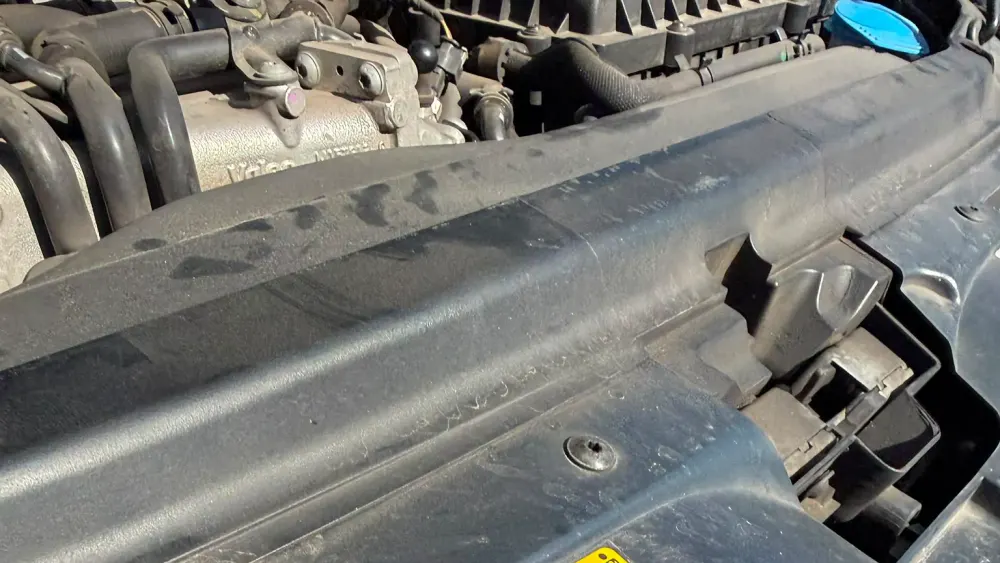
Oil for a high-mileage engine
An engine over 150,000–200,000 km has different needs. Find out what sets high-mileage oil apart and when it’s worth reaching for it.

Oil for a high-mileage engine
8 min readOil for a high-mileage engine, known in the trade simply as high mileage, is a product deliberately matched to the needs of older, more worn power units. What sets it apart from ordinary oil is not so much the class of the base stock as the additive package, which has one overriding goal: to look after ageing seals, limit oil consumption and slow the small leaks that appear in almost every engine after years of service. It is not a miracle elixir that reverses wear, but a sensible tool that can genuinely extend a tired engine's quiet, trouble-free life.
A great deal of confusion has grown up around high-mileage oils. Some drivers treat them as a marketing gimmick, others as a cure for every problem an old car might have. The truth lies in between: it is a specific category of products that makes real sense at the right moment in an engine's life, and is a needless expense at the wrong one. In this article we explain what really distinguishes high-mileage oil, how its additives work, why it often has a higher viscosity and a higher HTHS figure, when it is worth reaching for, and why the myth that it is a waste to put good oil in an old car is one of the most damaging beliefs a driver can hold.
What exactly is high-mileage oil?
High-mileage oil is built on a perfectly normal, good base stock — most often synthetic or semi-synthetic — to which the manufacturer adds an extended package of additives aimed at the typical ailments of older engines. The base itself is nothing magical here; it is precisely the blend of enhancers that makes the oil behave differently from an ordinary product of the same viscosity. If you want to understand how a mineral base differs from a synthetic one in the first place, it is worth reading our guide on how to choose between synthetic and semi-synthetic oil — high mileage is, in practice, a layer built on top of that distinction.
In practice you will recognise high-mileage oil by the description on the container: manufacturers use phrases such as high mileage, for engines with more than 100,000–150,000 km, or foreground slogans about seal protection. What matters, however, is not the marketing slogan but whether the oil meets the specification and approval required for your engine. A high-mileage oil that does not match the manufacturer's specification is simply a bad oil, regardless of the promises on the label. The word on the can never replaces checking the exact standard your model demands.
- An extended package of additives that condition seals, shaft seals and rubber components
- Substances that limit oil consumption and small leaks
- Often a slightly higher viscosity and a higher HTHS figure
- Better protection of worn, looser mating surfaces
- Typical grades are 5W40 or 10W40, less often a 5W30 in a high-mileage version
Seal-caring additives — how do they work?
The most important feature of high-mileage oils is what are known as seal conditioners. These are compounds that penetrate the rubber and elastomer parts — crankshaft seals, shaft seals, gaskets — and restore some of the flexibility they have lost over years of working at high temperature. Over time the rubber hardens, shrinks and cracks, so it no longer sits tightly against the rotating shafts. High-mileage additives slow down and partly reverse this process, so the seal clings better again and lets less oil past. The effect is not instant, but it usually becomes noticeable within a few hundred kilometres of use.
The benefit is most tangible when the engine starts to consume a little oil or leaves marks on the driveway. If you are seeing a steady drop in oil level and wondering whether it is still normal or already a fault, it is worth establishing the cause first — we cover the reasons an engine burns oil separately. High-mileage oil can reduce small leaks through tired seals, but it will not replace a repair if the root of the problem is a worn piston group or a seriously damaged gasket.
Higher viscosity and the HTHS figure
The second characteristic feature of high-mileage oils is often a slightly higher viscosity than the base grade for a given car. In practice, instead of a 5W30 the manufacturer offers a 5W40 or 10W40. A thicker oil film fills the enlarged clearances of a worn engine better, damps mechanical noise more effectively and keeps oil pressure up on a hot unit. If you want to understand exactly what those symbols mean, we explain step by step what a marking such as 5W30 stands for and how to read the winter and summer viscosity.
Viscosity is linked to a less familiar but very important parameter, HTHS — the dynamic viscosity at high temperature and high shear. Put simply, HTHS describes how thick and durable the oil film remains under the toughest conditions: hot, heavily loaded, between fast-moving parts. High-mileage oils usually have a higher HTHS, which gives an older engine a greater safety margin in critical places such as the main bearings or the camshaft. It must be remembered, though, that viscosity and HTHS should never be pushed up arbitrarily against the manufacturer's recommendations, because oil that is too thick can actually do harm in some modern engines, raising resistance and fuel consumption.
When is it worth switching to high mileage?
The conventional threshold quoted is 150,000–200,000 km, but the mileage itself is only a rough guide. What matters more is the real condition of the engine and how it behaves. Switching to a high-mileage oil makes sense when the unit starts to show the typical signs of wear: a slow drop in oil level between changes, small leaks, louder running when hot, or a fall in oil pressure once the engine warms up. That is when the seal-caring additives and the higher viscosity deliver the most benefit.
- Mileage above 150,000–200,000 km, especially in older designs
- A steady, slow loss of oil that forces regular top-ups
- Small leaks and weeping seals visible under the car
- Louder engine running and a drop in oil pressure when hot
- A wish to keep the car running for a few more seasons without investing in an overhaul
It is worth stressing that switching to high mileage does not have to mean changing over by force at every service. If the engine is in good shape, has low mileage and does not consume oil, a dedicated high-mileage product will give it no extra advantage. It is a tool for a specific stage in the unit's life, not an oil that is better by definition. If, on the other hand, you already have to top up the level regularly, you will find our guide on how to sensibly add oil between changes useful.
The myth that good oil is wasted on an old car
This is one of the most persistent beliefs circulating among drivers: since the car is old and on its last legs anyway, there is no point putting decent oil in it. The truth is exactly the opposite. A worn engine works in harder conditions than a new one — it has larger clearances, holds pressure less well and is more prone to local overheating. It is precisely such a unit that benefits most from good, properly matched oil that maintains a stable lubricating film and protects tired surfaces.
Saving on oil in an old car is a false economy. A few pounds of difference on a container means nothing against the cost of repairing a seized bearing or replacing a timing drive. The limit is never oil that is too good, but oil that is wrongly matched — the wrong viscosity, without the required approval, or simply too cheap to protect anything. An old engine does not need pity; it needs oil that meets its real requirements. Most drivers, in fact, make a mistake not by choosing oil that is too good, but by choosing oil that is too cheap and unsuited to their engine.
With an old engine the point is not to avoid wasting good oil, but to choose one that matches its wear and the manufacturer's requirements. It is the tired unit that needs proper protection most of all.
How to choose oil for high mileage?
Choosing a high-mileage oil starts where any other choice does — with the engine manufacturer's requirements. The starting point is always the required viscosity and approval written in the service book, not the words high mileage on the container. Only within the permitted range is it worth reaching for a high-mileage version, and possibly a slightly thicker grade if the manufacturer allows it. In practice the choice is best based on the real state of the unit: its mileage, the rate at which it consumes oil, and the symptoms you observe day to day.
There is no single universal high-mileage oil that suits every car — an ageing naturally aspirated petrol engine has different needs from a high-mileage diesel with a particulate filter, where you also have to watch the Low SAPS specification. So if you are unsure, it is worth discussing the choice with someone who knows your engine and can combine the manufacturer's requirements with the real condition of the unit. A properly chosen high-mileage oil can buy an old car many calm, trouble-free kilometres.
Frequently asked questions
Will high-mileage oil fix a leak?
Not in the literal sense — oil does not glue cracked gaskets back together. It can, however, reduce small leaks through tired, hardened seals by restoring a little flexibility to the rubber. If the leak is minor and stems from the natural ageing of the seals, high mileage often reduces it noticeably. But if oil is pouring out or vanishing before your eyes, that is a signal for a mechanical repair, not an oil change.
From what mileage is it worth considering high-mileage oil?
The conventional threshold is 150,000–200,000 km, but that is only a guide. The signs of wear matter more: oil consumption, small leaks, louder running. A well-maintained engine can happily run on ordinary oil even at higher mileage, while a neglected one will start to need support sooner. It is the condition of the unit, not the number on the odometer, that decides.
Can I use a thicker oil to stop the engine burning oil?
A slightly higher viscosity within the range permitted by the manufacturer can help in a worn engine and may indeed reduce oil consumption. What you must not do is raise the viscosity arbitrarily, against the recommendations — oil that is too thick reaches the furthest corners more slowly after start-up and, in some modern engines, increases friction and fuel use. Any change of grade should stay within what the car's documentation allows.
Will high-mileage oil shorten the change interval?
Not in itself — it is still a fully-fledged oil and can be used within the standard interval set for the car. It is worth remembering, though, that an old, worn engine dilutes the oil with fuel more readily, pushes more combustion products into it and uses it up faster. In practice, with high-mileage units it is often worth shortening the change interval a little, whatever oil you use.
Is it worth switching to high mileage in a low-mileage car?
There is no need. An engine in good shape that does not consume oil and does not leak will gain nothing from seal-conditioning additives. High-mileage oil is a solution for a particular stage of a car's life, not automatically a better product. For a younger car what matters most is compliance with the manufacturer's approval, not the words high mileage on the pack.
Not sure whether your engine has reached the point for a high-mileage oil? During a mobile oil and filter change we will assess the real condition of the unit and match the product to its mileage, its rate of oil consumption and the manufacturer's requirements — so you can drive on calmly for another few seasons.
Related services
Need an oil change?
We’ll come to your address or pick up your car and handle the rest. No queues.