A jump starter power pack — is it worth it?
A portable jump starter starts the car without a second vehicle or leads. Find out how it works, how to choose one and when it really helps.
A jump starter power pack — is it worth it?
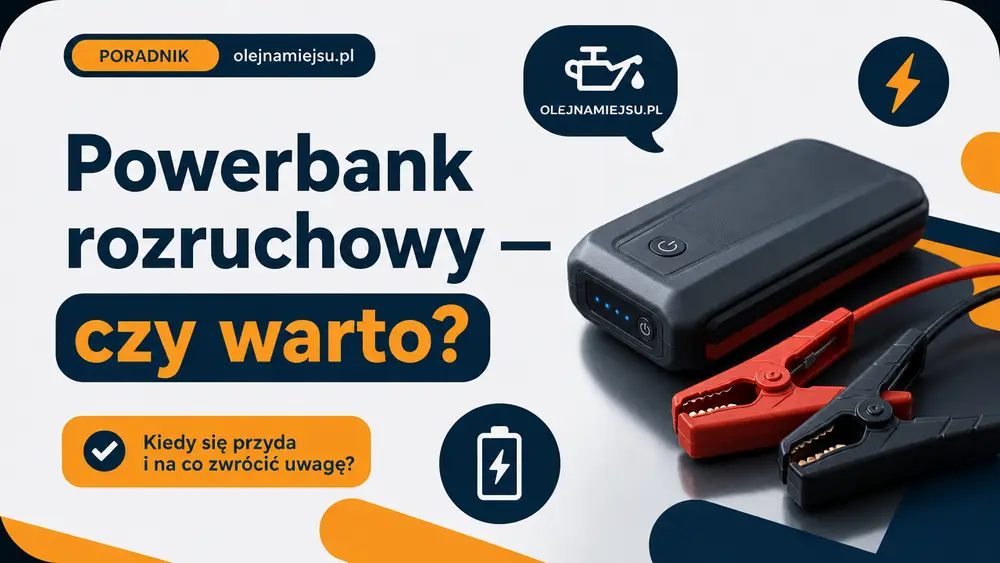
7 min readA jump starter power pack is a small device that can start a car with a flat battery on its own — without a second vehicle and without leads from a kind driver. For many people it’s the most convenient insurance against a flat battery, especially as it fits in the glovebox and is always on hand.
In this article we explain how a jump starter works, how to choose one correctly for your car, how to use it safely, and what advantages and limitations it has compared with classic leads. We also explain what such a device won’t solve, and when — instead of another emergency start — it’s simply worth replacing the battery.
How it works
It’s a powerful lithium battery with clamps that briefly delivers the high current needed to start the engine. You connect it directly to the car’s battery, start the engine and disconnect it. Many models also work as an ordinary power bank for a phone, and some come with a torch or a USB port.
The key here is the high current the device can deliver in a short time. The starter needs a solid “kick” to spin a cold engine, and a jump starter is designed for exactly this momentary, intense draw. Once the car starts, the alternator takes over and the jump starter can be disconnected and put away. The whole thing usually takes a few minutes and needs no tools or special technical knowledge.
It’s worth clearly distinguishing a jump starter from an ordinary power bank for electronics. The latter, despite the similar name, won’t deliver a starting current and isn’t suitable for starting a car. Starting needs a device clearly marked as a jump starter, with the right battery clamps and current ratings.
How to choose a jump starter
- A high enough starting current for your engine
- A larger power reserve for diesels and bigger capacities
- Protections: against reverse polarity and short circuit
- Solid clamps and leads of the right cross-section
- Keep it charged, especially before winter
The most important parameter is the starting current, usually given in amps (peak current). A basic model is enough for a small petrol car, but bigger engines, and especially larger diesels, need a more powerful device with a higher current. It’s worth choosing a jump starter with a reserve, because starting in frost needs more energy, and too weak a model may not cope just when it’s needed most. The second important feature is the device’s capacity, which decides how many starting attempts one charge is good for.
Protections matter just as much. Good jump starters have protection against reverse polarity, short circuit and overheating, which greatly reduces the risk of a mistake while connecting. It’s a big advantage over ordinary leads, where a costly error is easier, one that can damage the electronics. Also pay attention to the quality of the clamps and leads themselves, because cheap, thin cables carry a high current poorly and can fail at the crucial moment.
How to start the car safely with a jump starter
Operation is simple, but it’s worth keeping the right order, just as with classic leads. First you connect the red clamp to the battery’s plus, and the black one to ground, that is a metal body part away from the battery. Only then do you switch on the jump starter and try to start the engine with a short turn of the key.
- Make sure the jump starter is charged
- Connect the red clamp to the car battery’s plus
- Connect the black clamp to ground, away from the battery
- Switch on the jump starter and start the engine with a short crank
- After starting, disconnect the clamps in the reverse order
If the car doesn’t start first time, wait a moment before the next attempt so as not to overload the device and to let it cool. After a successful start it’s worth covering a longer route or charging the battery with a charger, because starting with a jump starter alone doesn’t replenish the energy in the battery — it only briefly supplies the current needed to start the engine.
What to watch out for during use
Although operating a jump starter is simple, a few things are worth keeping in mind for safety. Don’t let the clamps touch when the device is on, and don’t connect them to the wrong poles, even if the jump starter has protections. It’s also worth avoiding very long, repeated starting attempts one after another, because they heavily load the device and can dangerously overheat it.
After use, it’s worth recharging the jump starter as soon as possible so it’s ready for the next emergency, which could happen soon. A good habit is also to check the charge level periodically, even if the device has sat unused in the boot for a long time. That way you avoid the unpleasant surprise of the jump starter being empty exactly when it’s needed most.
Advantages over leads
A jump starter needs neither a second car nor knowledge of the lead connection order, which reduces the risk of a mistake. It’s compact and always “to hand” in the boot.
The biggest advantage is independence: you don’t have to find a second driver or line the cars up next to each other, which can be impossible in a tight garage or an underground car park. Built-in protections additionally guard against the consequences of a mistake that no one will catch for you with ordinary leads. For people who don’t feel confident “borrowing power” from strangers’ leads, a jump starter is simply safer and much less stressful.
A jump starter will start the car once or twice, but it won’t repair a worn battery — it’s an emergency tool, not a substitute for replacement.
A jump starter versus other options for a flat battery
A jump starter isn’t the only option when the battery dies, but in many situations the most convenient. Classic leads need a second, working car and care with the connection order. Push-starting works only in a manual and can be risky. Roadside assistance is reliable but you have to wait for it and pay for it.
Against this background a jump starter comes out well: it’s independent, quick and fits in the boot. It has one weakness, though — you have to remember to keep it charged. So the best strategy is a combination: the jump starter as first aid on the spot, plus the awareness that if the battery is already worn, it will need replacing anyway.
Who a jump starter is especially useful for
A jump starter is most appreciated by drivers of cars used irregularly, where the battery has time to go flat during longer standstills, for example a family’s second car. It’s also a sensible buy for people who often drive long routes, beyond areas where help from another driver is easy to find, and for those who don’t want to depend on strangers’ goodwill in a car park. It comes in handy on trips abroad too, where independence is especially valuable.
It also helps in winter, when the risk of a flat battery is greatest and frost reduces the battery’s performance. Bear in mind, though, that a jump starter is insurance against a breakdown, not a way to keep using a worn battery. If the battery needs a start more and more often, simply owning a jump starter won’t solve the problem.
What it won’t solve
If the battery keeps going flat, a jump starter only puts off the problem. Signs of wear mean it’s time to replace the battery.
A jump starter also won’t diagnose the cause of the discharge. If a faulty alternator or an excessive parasitic drain is to blame, the device will let you start the car, but the problem will keep coming back stubbornly until the source is removed. So treat it as a stopgap that gives you time to reach the service and get a proper diagnosis, not as a way to permanently avoid a repair or battery replacement.
Frequently asked questions about jump starters
Will a jump starter start a car with a completely dead battery?
Usually yes, provided it has the right starting current for the given engine and is itself charged. That’s exactly the jump starter’s advantage over the “push” method, which often fails with a completely empty battery. Large diesels, though, need a more powerful model, because a weaker one may not cope.
How often should I charge a jump starter?
It’s best to check its charge every few months and top it up before the winter season, when the risk of a flat car is greatest. Lithium devices gradually lose part of their charge on their own, so a flat jump starter in the boot won’t help in need. Regular checking is the condition for really being able to rely on it on a frosty morning, rather than finding it empty itself.
Can a jump starter damage the car?
With correct connection the risk is minimal, especially as good models have reverse-polarity protection. It would only be dangerous to ignore these protections or use a cheap device without them. That’s why it’s worth choosing a jump starter from a reputable brand with a full set of protections.
Does a jump starter need special storage?
Lithium devices best tolerate storage at a moderate temperature and partial charge. Extreme frost and heat clearly shorten their life, so in winter it’s worth keeping the jump starter in the warm cabin rather than in a boot chilled overnight. Stored sensibly and regularly recharged, it will serve for many years.
Will a jump starter replace a battery change?
No. A jump starter lets you start the car, but it doesn’t restore a worn battery’s capacity or remove the cause of the discharge. If the battery needs starting more and more often, it’s already on its last legs and needs replacing. A jump starter is then worth treating as a bridge to the service, not a way to prolong a tired battery’s life indefinitely.
If the battery keeps going flat despite the jump starter, we’re happy to check its condition and, if needed, replace the battery with call-out to your address, choosing the right type for the car. While we’re at it, we’ll also check the charging voltage to rule out a faulty alternator as the cause. That way you solve the problem at its source rather than just putting it off with another emergency start.
Related services
Need an oil change?
We’ll come to your address or pick up your car and handle the rest. No queues.