5 myths about oil changes
Many myths have grown up around oil changes. We debunk the 5 most popular ones to make caring for your engine easier.

5 myths about oil changes
8 min readA surprising number of myths have grown up around oil changes, and many of them can quietly harm both your engine and your wallet. Some are leftovers from the era of mineral oils and much simpler engines, some come from oversimplified advice online, and others are simply repeated out of habit in workshops. In this article we take on the five most widespread beliefs and explain how things really work, so that looking after your engine becomes easier, cheaper and far less stressful.
An oil change is one of the most important — and, at the same time, one of the cheapest — service jobs you can do for a car, provided you do it wisely. Follow the myths, though, and it is easy either to overpay for things you do not need or to cut corners exactly where you must not. Below you will find practical, experience-based facts that will help you make better decisions at every future service, whether you drive a modern turbocharged engine or an older, simpler unit.
Myth 1: Oil is changed by mileage only
This is probably the most repeated myth of all. Mileage certainly matters, but it is never the only criterion. Engine oil also ages over time: its additive package gradually wears out, and the oil itself absorbs moisture, combustion by-products and fine contaminants regardless of whether the car covers thousands of kilometres or mostly sits in the garage. That is why even a car driven only a few thousand kilometres a year should have its oil changed on a regular schedule, rather than someday, once it finally reaches the limit.
In practice the rule is simple: change the oil once a year, even at low mileage, or once you reach the recommended mileage interval — whichever comes first. A car used mainly for short, seasonal trips ages its oil faster than the odometer suggests, so the time criterion often matters more than the kilometres themselves. Treating the factory maximum interval as a target for every driving style is one of the most common and most costly mistakes.
A good example is a car used only at weekends or seasonally. For most of the year it sits still in the garage, yet the oil inside still ages, absorbs moisture from the air and loses some of its properties. Looking only at the low mileage, the owner keeps postponing the change because it is not time yet, while the oil has long passed its sensible shelf life. That is this myth playing out in practice, and years later it can end in accelerated engine wear.
Myth 2: The more expensive the oil, the better
Price on its own guarantees nothing. What truly matters for your engine is compliance with the manufacturer's approval — the specific standard the engine maker defined for that unit. A cheap oil with the correct approval is a better choice than an expensive, race-inspired oil without the right specification. An approval is not marketing; it is the result of testing that confirms the oil protects a given engine the way its designers intended.
That does not mean price is irrelevant. Reputable oils are often more expensive because they use a better base stock and a stronger additive package — but that advantage only counts once the oil meets the required specification. Choosing oil purely by price, in either direction, risks ending up with a product that simply does not suit your engine or the way you drive it.
Myth 3: The oil filter can be changed every second oil change
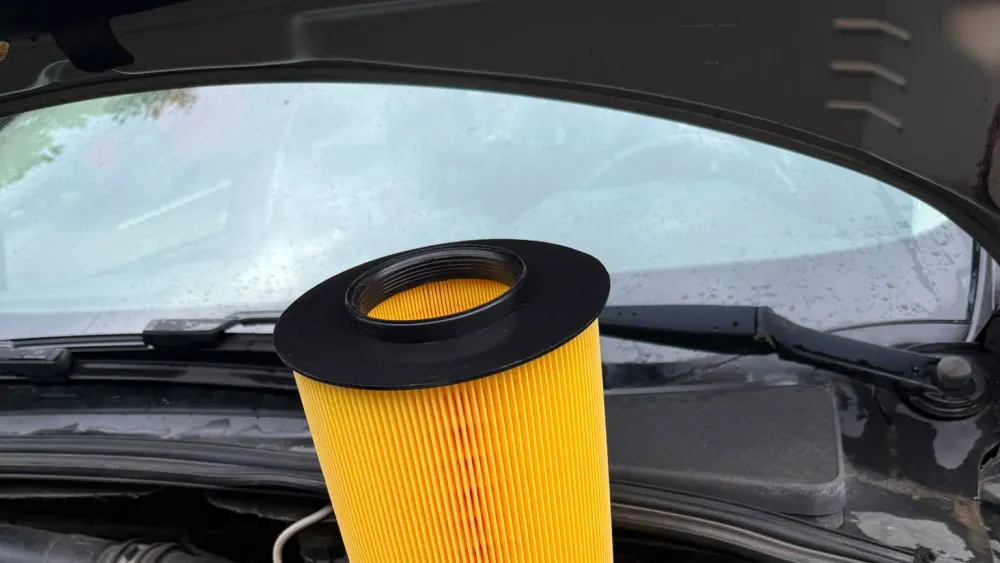
This is a false economy that can cost you dearly. The oil filter traps soot, metal particles and other contaminants circulating through the lubrication system. With every kilometre it gradually fills up until it can no longer filter effectively. Leaving an old filter in place for another interval means that fresh, clean oil is forced through a clogged element from the very first kilometre, which defeats much of the point of changing the oil at all.
In the worst case a blocked filter opens its bypass valve, and unfiltered oil — complete with all its contaminants — flows straight into the engine. That is why the rule is unambiguous: the oil filter is always replaced together with the oil, at every single change. Saving on the filter is a phantom benefit that undermines the entire service.
Myth 4: Engine flushing is always necessary
Not true — flushing is a tool, not a routine. In a regularly serviced engine, one whose oil was never left overdue, flushing is usually not needed and can even be risky. In neglected engines with a thick layer of deposits, flushing fluid can dislodge accumulated sludge that then clogs the oil channels. The decision to flush should be made case by case, after assessing the engine's condition, rather than just in case.
The best prevention is simply a regular oil change at sensible intervals. An engine kept clean from the inside does not need aggressive treatments, because deposits never get the chance to build up in the first place. We therefore treat flushing as a rescue measure for specific situations, not as a standard part of every oil change.
Myth 5: Every 5W30 oil is the same
This is one of the most dangerous oversimplifications. The 5W30 marking describes only the viscosity grade — how the oil behaves at low and high temperatures. It says nothing about approvals, the additive package or the intended application. Two oils with the same 5W30 viscosity can be designed for completely different engines: one for units with a particulate filter and reduced ash content, another for older petrol designs.
Pouring the wrong 5W30 into an engine with a DPF can, over time, clog the particulate filter even though the viscosity appears to match. That is why, when selecting oil, we look not at the 5W30 symbol alone but at the full specification and the approval the manufacturer requires. This is precisely where the most expensive mistakes are made.
It is also worth remembering that engine makers tighten their specifications every few years. A 5W30 from a decade ago may have been excellent for the cars of its day, but it will not necessarily meet today's requirements for turbocharger protection, compatibility with exhaust after-treatment systems or resistance to LSPI pre-ignition in direct-injection engines. The 5W30 viscosity number on its own tells you none of this — what counts is a current approval assigned to your specific unit.
A well-chosen, inexpensive oil with the correct approval protects your engine better than the priciest product without the right specification.
Where do oil-change myths come from?
Many myths have their roots in the past. When mineral oils dominated and engines were simpler and less stressed, some of these rules genuinely made sense. Today's units — downsized, turbocharged, with direct injection and particulate filters — are far more demanding and far less forgiving. Carrying old habits over to modern engines can therefore turn into an expensive misunderstanding.
The second source is the urge to save money in the wrong place. Skipping the filter, stretching intervals beyond reason or choosing oil by guesswork appears to lower the cost of a single change, but in reality it shortens the life of the engine. It is worth remembering that repairing a power unit costs many times more than a lifetime of proper oil changes ever would.
How to avoid falling for the myths in practice
The best protection against myths is a handful of simple habits. Instead of relying on hearsay rules, base your decisions on the car's documentation and its real operating conditions. The checklist below organises what actually matters at every oil change and helps you avoid the most common and most expensive mistakes.
- Check your service book for the required approval and specification, not just the viscosity grade
- Follow the whichever-comes-first rule — mileage, or a maximum of one year since the last change
- Always replace the oil filter together with the oil, with no exceptions
- Shorten the interval if you drive mostly in town, on short trips and with a cold engine
- Keep an eye on the oil level and its condition on the dipstick between changes
- Use flushing only when the condition of a specific engine genuinely justifies it
By following these rules you stop guessing and start managing your engine's condition deliberately. It is regularity and a specification-compliant choice — not the price or fashionable additives — that decide how long the power unit stays in good shape. When in doubt, it is always better to ask the workshop than to act on a popular myth.
Frequently asked questions about oil myths
Is synthetic oil always better than semi-synthetic?
Not always — the specification required by the manufacturer decides. Modern engines usually demand synthetic oils with specific approvals, and those are exactly what you should use. In an older design intended for semi-synthetic oil, however, forcibly upgrading to full synthetic does not always bring a benefit. The key is compliance with the recommendation, not the name of the technology printed on the label.
Can you mix oils from different brands?
In an emergency, topping up with an oil of the same viscosity and approval will not destroy the engine. It is not, however, a practice worth relying on permanently, because additive packages from different makers may not complement one another. It is best to stick to one correctly chosen oil and to top up with the same product until the next full change.
Does a modern engine really need a change once a year?
Yes, especially if you drive rarely and only for short distances. Oil ages chemically and absorbs moisture regardless of mileage, and a car that mostly stands still does not save its oil — it soaks it in condensation and combustion by-products instead. That is why the time criterion here is just as important as the kilometres on the odometer, and often it is the deciding factor.
Do short trips shorten the life of the oil?
Absolutely. On a short run the engine never reaches full operating temperature, so water vapour and fuel do not evaporate out of the oil. This hits a diesel driven around town particularly hard, as it also suffers fuel dilution during DPF regeneration. For that style of driving the oil-change interval should be genuinely shortened rather than stretched.
Is the dashboard service reminder enough to rely on?
Not entirely. Flexible service systems estimate oil life from parameters such as engine temperature, load and trip length, but they cannot measure fuel dilution or moisture directly. In demanding conditions — city traffic, short trips, frequent cold starts — it is wiser to change the oil somewhat earlier than the computer suggests rather than to trust the indicator blindly.
If you want to be certain your oil is chosen correctly and in line with the manufacturer's approval, leave it to us — we'll change the oil with call-out at your address, with the right oil and filter selection. We always fit a new filter together with the oil, and you'll find a transparent price list on our website, with no hidden costs.
Related services
Need an oil change?
We’ll come to your address or pick up your car and handle the rest. No queues.