What oil for a petrol BMW? Longlife
What oil for a petrol BMW? Check the BMW Longlife-01/04 standards, recommended viscosities, and why the manufacturer’s approval matters more than the oil brand itself.
What oil for a petrol BMW? Longlife
7 min readOil for a petrol BMW is not the place for random choices. Bavarian units — often turbocharged and high-revving — have precisely defined requirements gathered in the BMW Longlife standards. In this guide we explain what the Longlife-01 and Longlife-04 approvals are, which viscosity to choose, and why it’s the approval, not the brand, that determines the right choice.
BMW Longlife standards — the basis of the choice
BMW uses its own system of oil approvals. It’s the manufacturer that tests oils for its engines and approves them for use, granting a Longlife standard. Pouring in oil with the right approval matters more than going by a brand’s popularity — two oils of the same viscosity can have different approvals and intended uses.
- BMW Longlife-01 — widely used in many BMW petrol engines
- BMW Longlife-04 — a newer standard, on some markets and units
- BMW Longlife-01 FE — a “fuel economy” variant with lower viscosity
- Always confirm the required standard in the manual and for the given engine
What viscosity for a petrol BMW?
Most often you’ll find 5W30 and 0W30/0W40 oils with a BMW Longlife approval, depending on the unit and market. High-revving, heavily loaded BMW engines cope well with oils that have a stable profile at high temperatures. The most important thing, however, remains meeting the right Longlife standard.
Longlife versus the real change interval
The Longlife system can extend the change interval based on operating conditions — sometimes even to very high mileages. In practice, especially with city and dynamic driving, many BMW owners deliberately shorten the interval to 10,000–15,000 km, treating the factory Longlife as an upper, not a target, limit.
A shorter interval better protects the turbocharger and limits deposit formation — especially in modern, turbocharged BMW petrol engines.
Checking the oil level in a BMW
Many newer BMWs don’t have a classic dipstick — the oil level is checked via an electronic sensor and the in-car menu. It’s worth knowing how to use this measurement, because some BMW units can consume oil, and driving on too low a level is dangerous.
With a BMW the Longlife approval is crucial — it’s that, not the brand or price, that guarantees proper engine protection.
The most common mistakes when choosing oil for a BMW
- Pouring in oil without a BMW Longlife approval
- Going by viscosity alone instead of the standard
- Maximising the interval under heavy use
- Ignoring oil loss in turbocharged units
- Top-ups with random oil of a different specification
Direct injection, turbo and deposits — the oil’s role
Modern BMW petrol engines combine direct injection with turbocharging, which places high demands on the oil. The oil works at high temperatures, is in contact with a hot turbocharger and must limit the formation of carbon and deposits. Here the oil’s quality and the timeliness of the change translate directly into turbo durability and system cleanliness.
After dynamic driving it’s worth giving the engine a moment to stabilise its temperature before you switch it off — a simple habit that extends the turbocharger’s life. Fresh oil of the right approval does the rest.
No dipstick? How to keep track of the oil level
In many newer BMWs the oil level is checked only electronically, through the in-car menu. It’s worth learning this procedure and checking the level regularly, especially before a longer trip. Some BMW units can consume oil, so ongoing checks let you react in time and avoid driving on too low a level.
- Check the oil level regularly (electronic measurement or dipstick)
- Keep a litre of oil with the right approval in the boot for topping up
- React to low-oil-level messages without delay
- Don’t mix oils of different standards “just in case”
Signs that a BMW needs an oil change
A modern BMW communicates a lot through its on-board systems, but it’s also worth paying attention to how the car behaves. Signs that the oil is worn or its level too low include:
- A message about the need for an oil change or a low level
- Harsher running and a metallic rattle on a cold start
- Bluish smoke from the exhaust when burning oil
- A drop in smoothness and higher consumption
- Clearly dark, worn oil in the measurement
Why you shouldn’t skimp on oil in a BMW
High-revving, turbocharged BMW units are demanding, and the cost of repairing the turbocharger, timing gear or the engine itself far exceeds the price of good oil. Skimping on quality or stretching the change is, in this case, an illusory benefit that can quickly backfire. A branded oil with the right Longlife approval is an investment in durability.
With a BMW it doesn’t pay to skimp on oil — the price difference is small, and the turbo and engine are at stake.
Oil together with the filter at a service
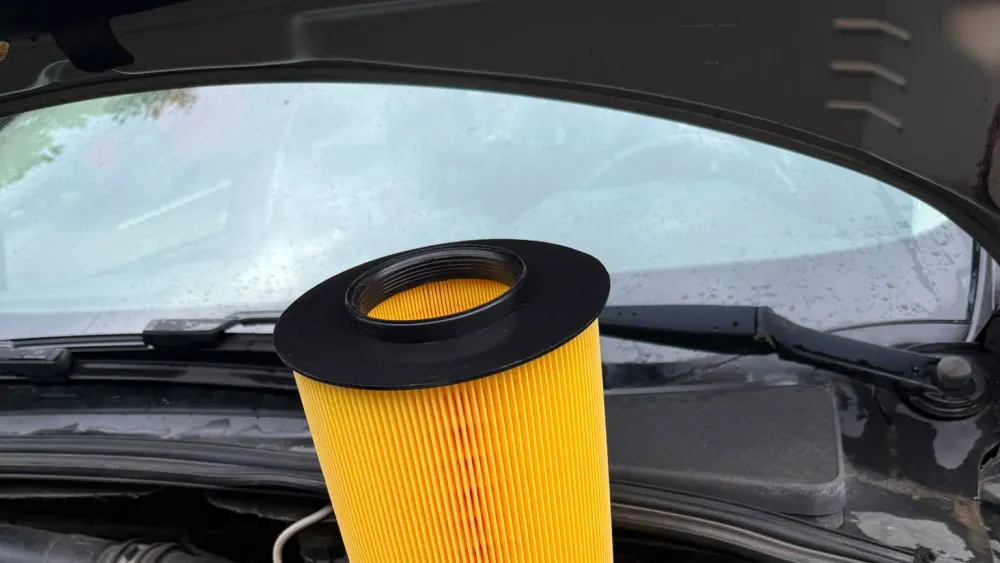
As standard, changing the oil in a BMW includes changing the oil filter and checking the level and any leaks. If the air or cabin filters haven’t been changed in a while, it’s worth doing so at the same time — one visit and a full set of tasks instead of several separate call-outs.
Frequently asked questions about oil for a BMW
Longlife-01 or Longlife-04?
It depends on the particular engine and market. Longlife-01 is widely used in many BMW petrol engines, while Longlife-04 is a newer standard present in some units. You’ll find the right approval for your car in the manual — and that’s what to go by when choosing.
Do I have to stick to the long Longlife interval?
You don’t have to change the oil rarely just because the Longlife system allows it. With city and dynamic driving, many BMW owners deliberately shorten the interval to 10,000–15,000 km, which better protects the turbo and limits deposits. It’s a sensible compromise.
How to check the oil level without a dipstick?
In newer BMWs the level is checked via the on-board menu and an electronic sensor. It’s worth carrying out the procedure on a warmed engine, on level ground, following the manual. Regular checks are important, because some BMW units consume oil.
What oil for a high-mileage BMW?
At high mileage the BMW Longlife approval appropriate for the given engine still applies — that’s the starting point. In older, more worn units that consume oil, oils with a stable profile at high temperatures work well; sometimes a slightly higher viscosity makes sense, but only within what the manufacturer allows. It’s best to consult the choice, taking the condition of the particular car into account.
Why a BMW consumes oil — and when that’s still normal
Oil consumption in a BMW is one of the most discussed topics among owners of the brand — and one of the most misunderstood. In many models the manufacturer explicitly allows a certain oil consumption, treating it as a normal phenomenon in a high-revving, turbocharged engine rather than a fault. A driver moving from a car that consumed no oil at all reads it as an alarm.
The key is telling two situations apart. Steady, predictable consumption that doesn’t grow month by month usually falls within the manufacturer’s tolerance. Growing consumption is a completely different matter: if this year you top up twice as often as last year, that’s no longer “the engine’s character” but a signal that something is changing — most often in the piston rings or the turbocharger.
The practical consequence is single: in a BMW, checking the oil level isn’t a whim but an obligation. In cars without a dipstick it’s done through the on-board menu, and a litre of oil with the right approval in the boot makes as much sense here as a spare wheel.
How to look after a BMW engine day to day
Bavarian units like to be used, but they don’t like to be used thoughtlessly. A few habits that cost nothing genuinely translate into the durability of the turbocharger and the timing gear:
- Don’t go for high revs before the oil reaches operating temperature — the coolant gauge alone isn’t enough
- After dynamic driving, let the engine run briefly before switching it off
- Check the oil level regularly, not only after a message appears
- Keep the interval shorter than the maximum Long Life if you drive in the city or dynamically
- Don’t mix oils of different approvals “just in case”
A BMW doesn’t demand exceptional care — it demands consistency. The right Longlife approval and a watched oil level do more here than any additive off the shelf.
Should I top up with another brand of oil if I don’t have mine?
In an emergency it matters more that the oil level is right than that the oil is a single brand. Choose a product of the same viscosity and, if possible, with the same BMW Longlife approval. Driving on too low a level is far more dangerous for a turbocharged engine than a mixture of two good oils of the same specification.
We’ll select an oil with a BMW approval and change it with call-out
During a mobile oil change we’ll select a product with the right BMW Longlife standard for your model and change the filter at the address given. We’ll also advise a sensible interval matched to your driving style.
See the price list or book a time online — we’ll come with the oil and filter selected for your BMW.
Related services
Need an oil change?
We’ll come to your address or pick up your car and handle the rest. No queues.